Both are absorbable thread procedures for facial sagging, but they hold tissue in different ways. A PDO thread lift relies on small barbs along a polydioxanone thread that catch the tissue they pass through. Silhouette Soft uses a smooth absorbable thread fitted with small cones that sit in the subcutaneous tissue and hold it where the doctor places it. In Korea, the cone-type device imported for Silhouette Soft is approved for mid-face suspension, which the approval wording describes as lifting and fixing the tissue under the skin of the cheek. Which of the two a doctor considers depends less on the thread material than on where the sagging started and how much tissue needs to move.
What is a PDO thread lift, and how does it hold tissue?
A PDO thread lift places a barbed, absorbable thread under the skin so that the barbs catch soft tissue and hold it in a new position while the body gradually breaks the thread down. Outside Korea, “thread lift” and “PDO thread lift” are often used as if they were the same thing, so this is the natural starting point.
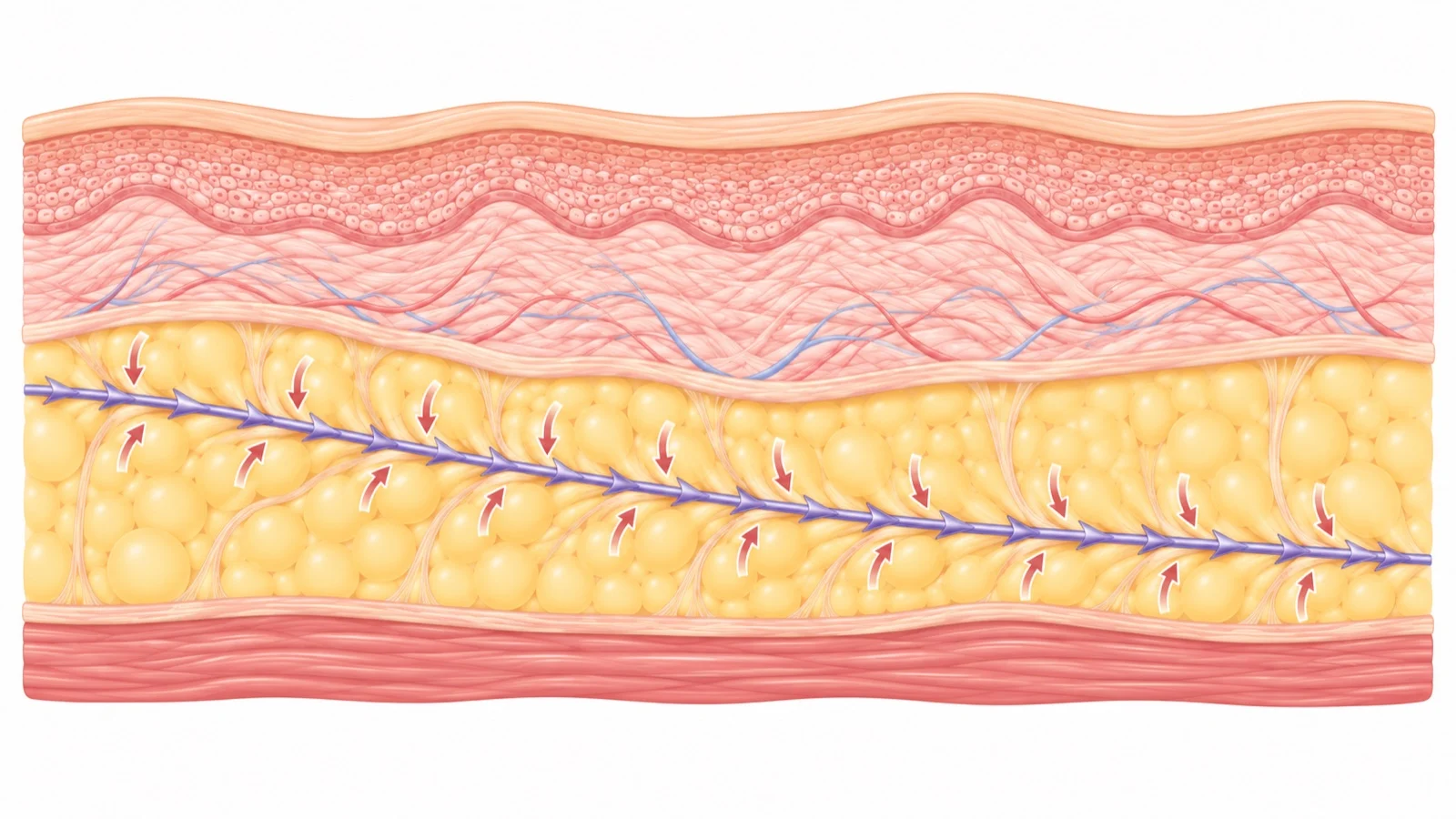 PDO stands for polydioxanone, a material that has been used for surgical sutures for decades and is absorbed by the body. PDO describes the material; many manufacturers make PDO threads.
- Threads used to reposition tissue are the barbed type. The barbs are either cut into the surface of the thread or formed in a mold, and they are the part that engages tissue.
- The doctor inserts the thread through a small entry point into the subcutaneous layer along a line planned in advance, and the barbs catch tissue along the whole length of the thread.
- The direction the barbs face decides which way the tissue is held. Some threads have barbs facing one direction; others have barbs facing two directions from the middle of the thread.
- The thread is absorbed gradually. What remains is the tissue’s new position along the thread’s path.
Because the lift comes from tissue being gathered along the thread, the path of the thread matters as much as the thread itself. Each manufacturer describes its own thread design in its product information, and those descriptions differ between products, so no single duration or result applies to PDO threads in general. Korean approval status is also checked product by product; the section on approvals below explains how.
How does Silhouette Soft hold tissue?
Silhouette Soft holds tissue at a series of points instead of along the whole thread. The thread itself is smooth; the anchors are small cones fixed along it, and the cones face toward each other from the middle of the thread, so tissue is held from both sides once the thread is in place.
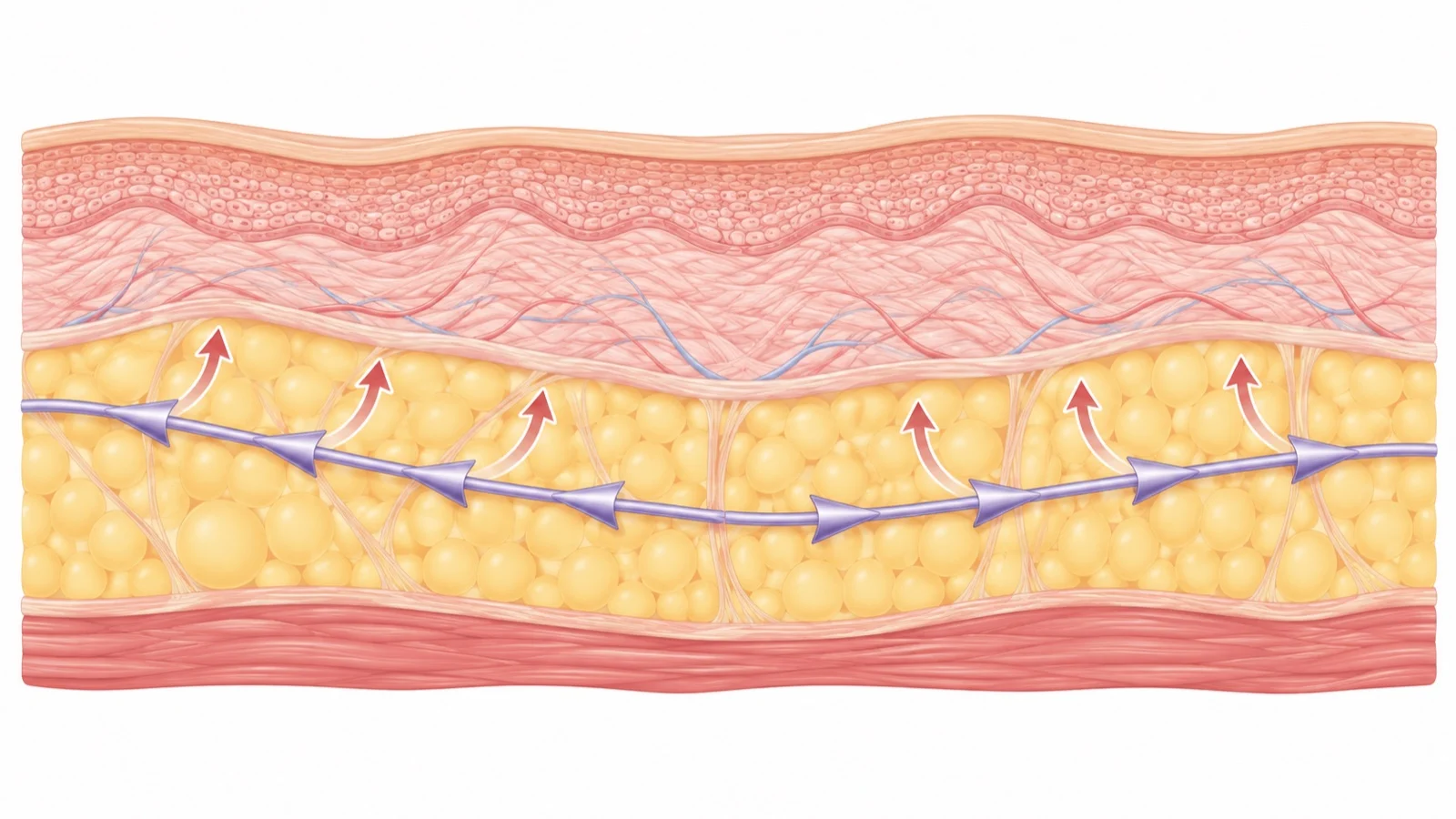 According to the manufacturer’s product description, the thread is made of poly-L-lactic acid (PLLA) and the cones of poly(lactic-co-glycolic acid) (PLGA). Both are absorbable.
- Each cone engages a small area of tissue, and the number and spacing of cones vary by product version. The product is supplied in several cone counts and thread lengths.
- The Korean approval describes the device as an absorbable thread with cones, used to lift and fix the tissue under the skin of the cheek.
- The cones, not the surface of the thread, are the anchoring points.
The approval wording in Korea is about suspension: lifting and fixing tissue. Claims you may see elsewhere about collagen or long-term skin quality are not part of that wording, and they are not made here.
What does the Korean approval cover, and how can you check it yourself?
For any device used in Korea, the first thing to check is the Korean Ministry of Food and Drug Safety (MFDS) approval, because that is the regulation the clinic works under. Silhouette Soft is filed under the category the MFDS calls facial tissue fixation thread; PDO products are filed individually, and their category can differ by product.
- The MFDS device database is public at emedi.mfds.go.kr. It lists the approval holder, the product category, and the approved purpose.
- Records are filed under model designations, not brand names. The Silhouette Soft record, for example, is filed under the importer, Sinclair Korea, and a model code, without the words “Silhouette Soft.”
- The approved purpose for that record reads, in translation: for mid-face suspension, to lift and fix the subdermal tissue of the cheek, consisting of an absorbable thread and cones.
- PDO threads are approved product by product. To check one, ask the clinic for the product name and the approval holder, then search the database by those.
One note on what we could confirm: we matched the Silhouette Soft record by the importer and by the cone construction described in the approval text, which is specific to this product family. The record itself does not print the brand name, so if you want the approval number for your own records, ask the clinic to show you the product information sheet at your consultation.
What does the examination look at before either is considered?
The deciding factor is the pattern of sagging. In earlier articles on this site, on why jowls form and on how Silhouette Soft is planned, the doctor at 4ever the Cheongdam describes his approach as looking at where the sagging began and in which direction the tissue has moved before deciding how a thread should be placed, instead of starting from the product. A consultation for either procedure is likely to cover the points below, so it helps to think about them before you arrive.
- Where the change you notice begins. A fold beside the nose, for example, can come from tissue above it moving down, not from the fold itself.
- How much soft tissue is present. A thread repositions tissue; it does not add volume, so an area that has lost volume is a different question from an area whose volume has moved. That distinction is why some plans on this site pair a thread with a volume treatment such as Ellansé.
- Skin thickness and how the skin drapes, which affects how a thread sits and whether anchor points can be felt.
- What has already been done in the same area: earlier threads, fillers, energy-based treatments, or surgery.
- What you want changed, described in your own words, so the doctor can say whether a thread addresses that at all.
What should a visitor from abroad plan for?
Plan for more than the procedure day. A thread lift is usually a single-visit procedure, but the clinic will want to see you afterward, and there are things you are asked not to do while the tissue settles.
- Follow-up timing: before you book travel, ask when the clinic wants to see you again and whether that visit can be replaced by photographs if you have already left Korea.
- Paperwork: ask for the product name and the product information sheet in writing, so you can look up the approval yourself and show it to a doctor at home if needed.
- Restrictions: ask which activities to avoid and for how long. Wide mouth opening, facial massage, and dental work are commonly on that list; the clinic gives you its own version.
- Your history: tell the clinic in advance about medications that affect bleeding, previous treatments in the same area, and any implants or fillers already in place.
How long to stay in Seoul depends on when the clinic wants to see you again, and that is set case by case. Do not plan around a general figure.
What are the side effects, and what should you watch for?
Swelling, bruising, and tenderness along the path of the thread are commonly reported after both types of procedure, and they usually settle as the tissue heals. The table below lists what is commonly documented for thread lifts and what clinics commonly instruct. It is not a list of everything that can happen; the clinic’s own written instructions take precedence.
| Commonly reported | What it usually looks like | What clinics commonly instruct |
|---|
| Swelling and bruising | Along the thread path, early on | Cold compress; avoid pressure on the area |
| Tenderness or a pulling feeling | Noticeable when chewing or smiling | Soft food; avoid wide mouth opening for the period the clinic sets |
| Dimpling or puckering of the skin | Small dents along the thread, often at the entry point | Usually settles; tell the clinic if it persists |
| Asymmetry | One side looks different from the other | Mention it at the follow-up visit |
| Thread or cone that can be felt or seen | Under thin skin, at an anchor point | Contact the clinic; do not try to adjust it yourself |
| Signs of infection | Increasing redness, warmth, pain, or discharge | Contact the clinic the same day |
Tell the clinic about any medication you take and any prior treatment in the same area. Whether this treatment suits you is a clinical judgment your doctor makes after examining you.
FAQ
Is Silhouette Soft a PDO thread?
No. According to the manufacturer, the thread is poly-L-lactic acid and the cones are poly(lactic-co-glycolic acid). PDO is a different material, polydioxanone. All three are absorbable.
Do the threads stay in the body?
No. Both PDO threads and Silhouette Soft are absorbed over a period of months. How long that takes is specific to each product, so ask the clinic for the product information sheet instead of relying on a general figure.
Can Silhouette Soft and PDO threads be used in the same treatment?
That is a treatment-planning question for the doctor. Whether two kinds of thread are used together depends on the pattern of sagging and on what each thread is being asked to do, and it is decided after an examination.
Can a thread be removed if I am unhappy with the result?
Ask this before the procedure. Once a barbed or coned thread has engaged tissue, removal is not always straightforward, and the answer depends on the product, the placement, and how much time has passed.
How do I check that a thread product is approved in Korea?
Ask the clinic for the product name and the approval holder, then search the MFDS device database at emedi.mfds.go.kr. Records are filed by approval holder and model designation, so the brand name alone may not find the record.
How long should I stay in Seoul after a thread lift?
Ask the clinic when it wants to see you again and plan your departure around that. If you have to leave earlier, ask whether the follow-up can be done with photographs and how to reach the clinic if something changes after you are home.
This article is general information about a treatment offered at 4ever the Cheongdam. It is not medical advice and does not replace consultation with a doctor who has examined you. Product approvals, regulations, and clinic practices change; please confirm anything that affects a decision with the clinic directly.
Source: Korean Ministry of Food and Drug Safety, medical device approval database, emedi.mfds.go.kr (record for absorbable facial tissue fixation thread with cones, approval holder Sinclair Korea, retrieved 21 September 2026).
4ever the Cheongdam
99-23 Cheongdam-dong, Gangnam-gu, Seoul, Korea
서울 강남구 청담동 99-23 (copy this line into Naver Map, Kakao Map, or show it to a taxi driver)
Tel. +82-2-518-7705

Both are absorbable thread procedures for facial sagging, but they hold tissue in different ways. A PDO thread lift relies on small barbs along a polydioxanone thread that catch the tissue they pass through. Silhouette Soft uses a smooth absorbable thread fitted with small cones that sit in the subcutaneous tissue and hold it where the doctor places it. In Korea, the cone-type device imported for Silhouette Soft is approved for mid-face suspension, which the approval wording describes as lifting and fixing the tissue under the skin of the cheek. Which of the two a doctor considers depends less on the thread material than on where the sagging started and how much tissue needs to move.
What is a PDO thread lift, and how does it hold tissue?
A PDO thread lift places a barbed, absorbable thread under the skin so that the barbs catch soft tissue and hold it in a new position while the body gradually breaks the thread down. Outside Korea, “thread lift” and “PDO thread lift” are often used as if they were the same thing, so this is the natural starting point.
Because the lift comes from tissue being gathered along the thread, the path of the thread matters as much as the thread itself. Each manufacturer describes its own thread design in its product information, and those descriptions differ between products, so no single duration or result applies to PDO threads in general. Korean approval status is also checked product by product; the section on approvals below explains how.
How does Silhouette Soft hold tissue?
Silhouette Soft holds tissue at a series of points instead of along the whole thread. The thread itself is smooth; the anchors are small cones fixed along it, and the cones face toward each other from the middle of the thread, so tissue is held from both sides once the thread is in place.
The approval wording in Korea is about suspension: lifting and fixing tissue. Claims you may see elsewhere about collagen or long-term skin quality are not part of that wording, and they are not made here.
What does the Korean approval cover, and how can you check it yourself?
For any device used in Korea, the first thing to check is the Korean Ministry of Food and Drug Safety (MFDS) approval, because that is the regulation the clinic works under. Silhouette Soft is filed under the category the MFDS calls facial tissue fixation thread; PDO products are filed individually, and their category can differ by product.
One note on what we could confirm: we matched the Silhouette Soft record by the importer and by the cone construction described in the approval text, which is specific to this product family. The record itself does not print the brand name, so if you want the approval number for your own records, ask the clinic to show you the product information sheet at your consultation.
What does the examination look at before either is considered?
The deciding factor is the pattern of sagging. In earlier articles on this site, on why jowls form and on how Silhouette Soft is planned, the doctor at 4ever the Cheongdam describes his approach as looking at where the sagging began and in which direction the tissue has moved before deciding how a thread should be placed, instead of starting from the product. A consultation for either procedure is likely to cover the points below, so it helps to think about them before you arrive.
What should a visitor from abroad plan for?
Plan for more than the procedure day. A thread lift is usually a single-visit procedure, but the clinic will want to see you afterward, and there are things you are asked not to do while the tissue settles.
How long to stay in Seoul depends on when the clinic wants to see you again, and that is set case by case. Do not plan around a general figure.
What are the side effects, and what should you watch for?
Swelling, bruising, and tenderness along the path of the thread are commonly reported after both types of procedure, and they usually settle as the tissue heals. The table below lists what is commonly documented for thread lifts and what clinics commonly instruct. It is not a list of everything that can happen; the clinic’s own written instructions take precedence.
Tell the clinic about any medication you take and any prior treatment in the same area. Whether this treatment suits you is a clinical judgment your doctor makes after examining you.
FAQ
Is Silhouette Soft a PDO thread?
No. According to the manufacturer, the thread is poly-L-lactic acid and the cones are poly(lactic-co-glycolic acid). PDO is a different material, polydioxanone. All three are absorbable.
Do the threads stay in the body?
No. Both PDO threads and Silhouette Soft are absorbed over a period of months. How long that takes is specific to each product, so ask the clinic for the product information sheet instead of relying on a general figure.
Can Silhouette Soft and PDO threads be used in the same treatment?
That is a treatment-planning question for the doctor. Whether two kinds of thread are used together depends on the pattern of sagging and on what each thread is being asked to do, and it is decided after an examination.
Can a thread be removed if I am unhappy with the result?
Ask this before the procedure. Once a barbed or coned thread has engaged tissue, removal is not always straightforward, and the answer depends on the product, the placement, and how much time has passed.
How do I check that a thread product is approved in Korea?
Ask the clinic for the product name and the approval holder, then search the MFDS device database at emedi.mfds.go.kr. Records are filed by approval holder and model designation, so the brand name alone may not find the record.
How long should I stay in Seoul after a thread lift?
Ask the clinic when it wants to see you again and plan your departure around that. If you have to leave earlier, ask whether the follow-up can be done with photographs and how to reach the clinic if something changes after you are home.
This article is general information about a treatment offered at 4ever the Cheongdam. It is not medical advice and does not replace consultation with a doctor who has examined you. Product approvals, regulations, and clinic practices change; please confirm anything that affects a decision with the clinic directly.
Source: Korean Ministry of Food and Drug Safety, medical device approval database, emedi.mfds.go.kr (record for absorbable facial tissue fixation thread with cones, approval holder Sinclair Korea, retrieved 21 September 2026).
4ever the Cheongdam
99-23 Cheongdam-dong, Gangnam-gu, Seoul, Korea
서울 강남구 청담동 99-23 (copy this line into Naver Map, Kakao Map, or show it to a taxi driver)
Tel. +82-2-518-7705