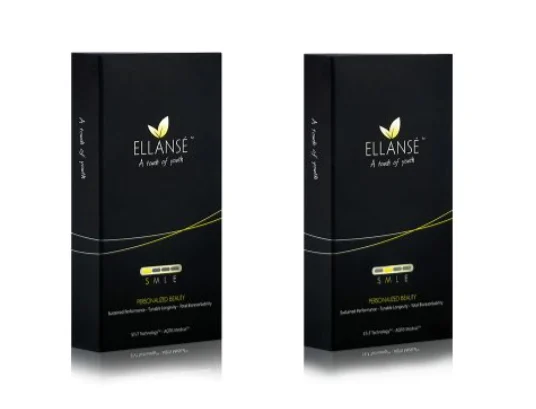
Patients who have had Ellansé and felt the outcome fell short of expectations are rarely wrong about the result.
What’s more often wrong is the treatment design that preceded it.
At 4ever Clinic, Dr. Younghan Seo explains why Ellansé addresses only one of two distinct aging mechanisms, what Silhouette Soft does that Ellansé cannot, and how the TL Code protocol combines the two to produce outcomes neither achieves alone.
Key Takeaways
Facial aging involves two simultaneous changes: structural volume loss and downward tissue displacement.
Ellansé addresses the first; Silhouette Soft addresses the second.
When descent rather than deflation is the primary driver, filling before lifting produces incomplete results regardless of product quality.
Ellansé reinforces the deep structural layer at the anterior cheekbone and mid-face.
Silhouette Soft physically repositions the descended deep fat pad and jowl tissue toward its original anatomical position.
The TL Code (Tissue Repositioning and Lifting Code) is 4ever Clinic’s combined protocol: Ellansé for deep ligament lifting and structural support, Silhouette Soft for tissue repositioning and contour redefinition.
For patients who want to avoid surgical facelift recovery or scarring, this combination addresses deep structural reinforcement and lifted tissue repositioning non-surgically.
Why Ellansé Results Sometimes Disappoint
Ellansé is a well-designed treatment.
PCL microspheres stimulate progressive collagen generation over time, reinforcing the deep support structures that have weakened and restoring volume to areas that have deflated.
For the anterior cheekbone and mid-face where structural support has thinned, Ellansé produces clinically meaningful improvement.
The limitation is not in the product — it is in the mismatch between what the product does and what the patient’s face actually needs.
Facial aging produces two distinct changes that often occur simultaneously:
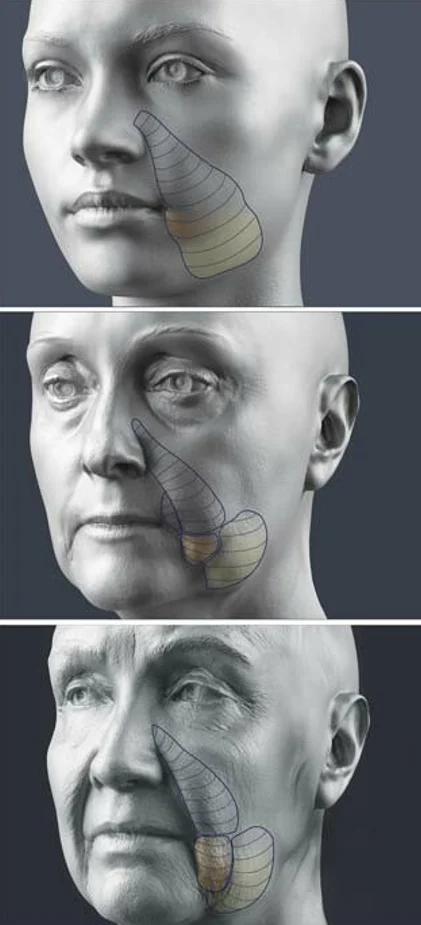
Volume loss: The deep fat compartments and skeletal support diminish, causing the face to look deflated and structurally unsupported.
Tissue displacement: Fat pads that once sat in the upper and mid-face descend toward the lower face and jowl, shifting the facial weight distribution downward.
When both are present, treating only volume loss leaves the displacement component unaddressed.
The face may look slightly fuller but not lifted, because the descended tissue is still in the wrong position regardless of how much structural support has been added beneath it.
Reading the Face by Layer
Before selecting a treatment approach, Dr. Younghan Seo assesses three distinct layers of the face:
The deep layer — whether ligament and skeletal support has weakened at the structural foundation.
The intermediate layer — whether the deep fat pads are still positioned correctly or have migrated downward.
The surface layer — the current state of skin elasticity and dermal quality.
This layered assessment changes the interpretation of the same presenting concern.
A nasolabial fold that appears because the anterior cheekbone has deflated and lost projection requires volume restoration.
A nasolabial fold that appears because the deep fat pad has descended and pooled at the fold requires repositioning.
Treating the second presentation with volume restoration adds weight to tissue that has already moved downward, which deepens the heaviness rather than correcting it.
Filling is the answer when the problem is deflation.
Lifting is the answer when the problem is descent.
The order matters.
What Ellansé Cannot Do
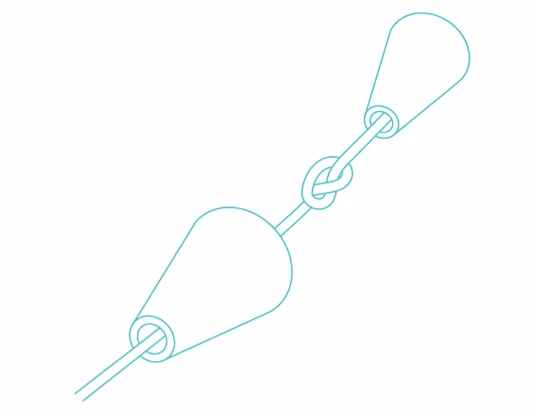
Ellansé excels at structural reinforcement and deep volumetric support.
What it cannot do is physically move tissue that has already descended to a lower position.
This is not a limitation of the product — it is a function of how injectable treatments work.
Injectable biostimulators restore the environment at the injection site.
They cannot generate upward traction on tissue that sits above and lateral to the injection point.
The deep fat pad descent that creates pronounced nasolabial folds and jowling requires a treatment that physically engages and repositions that tissue.
This is a mechanical problem that requires a mechanical solution.
What Silhouette Soft Does Differently
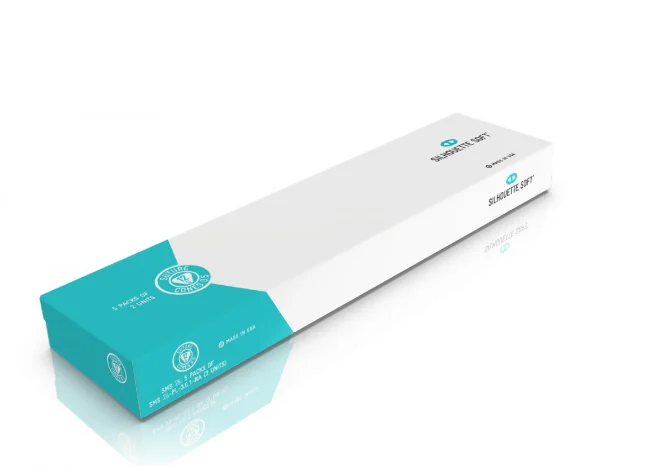
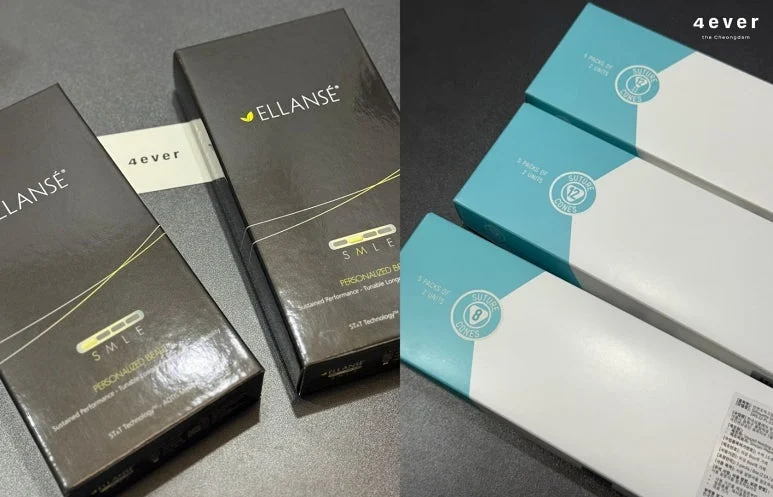
Silhouette Soft uses a patented 3D bidirectional cone structure rather than the standard barbs found on conventional thread lifts.
These cones engage the tissue at multiple points along the thread, distributing lifting force evenly and providing more stable fixation than barb-based systems.
The mechanism goes beyond mechanical lifting.
Once the cones are positioned at the correct tissue depth, collagen formation is stimulated at the repositioned site.
As this collagen matures over two to three months, the tissue is held in its new position by its own regenerated structure rather than by thread tension alone.
This is why Silhouette Soft produces gradual, progressive improvement rather than an immediate result that fades as the thread weakens.
The areas where Silhouette Soft demonstrates strongest results are precisely those where descent is most problematic: the deep fat pad that drives nasolabial fold formation and the descended jowl tissue that obscures jawline definition.
These are areas where the tissue needs to be moved, not supplemented.
The TL Code: Combining Both Approaches
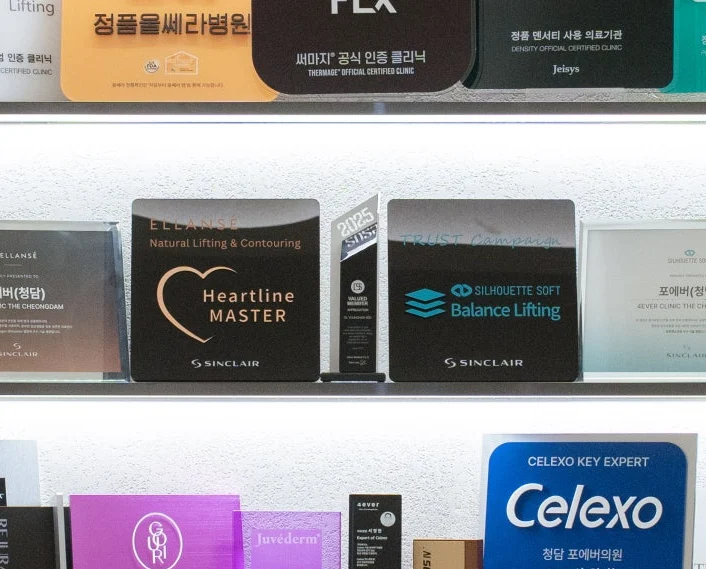
The TL Code (Tissue Repositioning and Lifting Code) is the combined protocol developed at 4ever Clinic that deploys each treatment for the specific problem it is designed to solve.
Ellansé addresses the anterior cheekbone and mid-face, reinforcing the deep ligament layer and rebuilding the volumetric support that has thinned with structural aging.
Silhouette Soft addresses the deep fat pad and jowl zone, physically lifting and repositioning the descended tissue that Ellansé cannot reach mechanically.
The combined result is a face where structural depth is restored and surface contour is redefined simultaneously.
The Ellansé result is more visually complete because the tissue above it has been repositioned into a relationship that allows the structural support to express itself correctly.
The Silhouette Soft result is more stable because it has a properly supported deep foundation beneath it.
For Patients Considering Surgical Options
Patients who have been told they need a facelift but are reluctant to commit to the recovery period, visible incisions, or the degree of change that surgery produces are increasingly exploring non-surgical alternatives for managing descent.
The TL Code addresses the two structural problems that surgical facelift targets — deep support restoration and soft tissue repositioning — through non-incisional means.
The degree of correction achievable is less than surgery in advanced cases, but for patients with early to moderate descent, the combination produces meaningful and lasting improvement without the commitments that surgery requires.
Frequently Asked Questions
Q. I had Ellansé and didn’t see much improvement. Does that mean it didn’t work?
A. Not necessarily. Ellansé works correctly when volume loss is the primary driver. If descent was also present and was the more significant contributor to the appearance you wanted to change, Ellansé addressed only part of the problem. The treatment wasn’t ineffective — the treatment design didn’t account for both mechanisms. Adding Silhouette Soft for the descent component often produces the improvement patients were originally expecting.
Q. Can Ellansé and Silhouette Soft be done in the same session?
A. Yes, and this is the standard TL Code approach at 4ever Clinic. Ellansé is placed first to establish the deep structural base, after which Silhouette Soft repositions the overlying tissue into a relationship that the newly reinforced deep layer can support. Same-session combination is appropriate when both mechanisms are identified in the pre-treatment assessment.
Q. How long do TL Code results last?
A. The two components have different durations. Ellansé collagen generation in clinical experience extends to two to three years. Silhouette Soft tissue repositioning typically persists for approximately one year before a maintenance session is useful. The combined protocol is therefore not a single-session permanent solution but a structured maintenance approach where each component is renewed at its appropriate interval.
Q. Is this combination more painful than either treatment alone?
A. Both treatments are performed under topical anesthesia. Silhouette Soft involves local anesthetic at the insertion sites. The combined session involves more procedure time than either alone, but discomfort is managed throughout. Post-procedure, some swelling and bruising in the treated areas is expected and typically resolves within five to ten days.
Q. How do I know if my concern is descent or deflation?
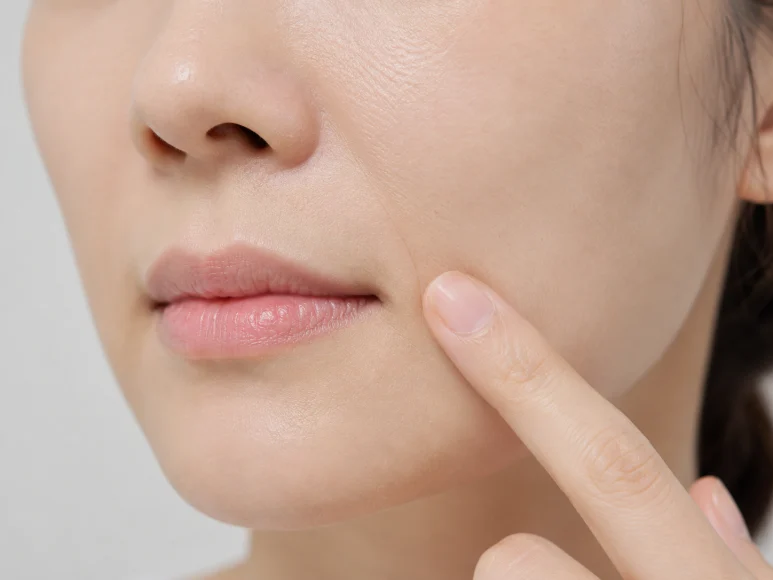
A. A practical self-assessment: place your fingertips on the area of concern and gently lift the tissue upward. If the appearance improves significantly with upward pressure, descent is a major contributor and repositioning is relevant to your treatment plan. If the appearance improves more with forward or outward pressure that adds projection, volume loss is the more significant component. Most patients over forty have some degree of both, which is why the layered assessment at consultation is the most reliable way to determine the appropriate approach.
Ready to discuss a treatment plan tailored to your skin?
4ever Clinic offers one-to-one consultations with Dr. Younghan Seo.
Book Your Consultation

Patients who have had Ellansé and felt the outcome fell short of expectations are rarely wrong about the result.
What’s more often wrong is the treatment design that preceded it.
At 4ever Clinic, Dr. Younghan Seo explains why Ellansé addresses only one of two distinct aging mechanisms, what Silhouette Soft does that Ellansé cannot, and how the TL Code protocol combines the two to produce outcomes neither achieves alone.
Key Takeaways
Facial aging involves two simultaneous changes: structural volume loss and downward tissue displacement.
Ellansé addresses the first; Silhouette Soft addresses the second.
When descent rather than deflation is the primary driver, filling before lifting produces incomplete results regardless of product quality.
Ellansé reinforces the deep structural layer at the anterior cheekbone and mid-face.
Silhouette Soft physically repositions the descended deep fat pad and jowl tissue toward its original anatomical position.
The TL Code (Tissue Repositioning and Lifting Code) is 4ever Clinic’s combined protocol: Ellansé for deep ligament lifting and structural support, Silhouette Soft for tissue repositioning and contour redefinition.
For patients who want to avoid surgical facelift recovery or scarring, this combination addresses deep structural reinforcement and lifted tissue repositioning non-surgically.
Why Ellansé Results Sometimes Disappoint
Ellansé is a well-designed treatment.
PCL microspheres stimulate progressive collagen generation over time, reinforcing the deep support structures that have weakened and restoring volume to areas that have deflated.
For the anterior cheekbone and mid-face where structural support has thinned, Ellansé produces clinically meaningful improvement.
The limitation is not in the product — it is in the mismatch between what the product does and what the patient’s face actually needs.
Facial aging produces two distinct changes that often occur simultaneously:
Volume loss: The deep fat compartments and skeletal support diminish, causing the face to look deflated and structurally unsupported.
Tissue displacement: Fat pads that once sat in the upper and mid-face descend toward the lower face and jowl, shifting the facial weight distribution downward.
When both are present, treating only volume loss leaves the displacement component unaddressed.
The face may look slightly fuller but not lifted, because the descended tissue is still in the wrong position regardless of how much structural support has been added beneath it.
Reading the Face by Layer
Before selecting a treatment approach, Dr. Younghan Seo assesses three distinct layers of the face:
The deep layer — whether ligament and skeletal support has weakened at the structural foundation.
The intermediate layer — whether the deep fat pads are still positioned correctly or have migrated downward.
The surface layer — the current state of skin elasticity and dermal quality.
This layered assessment changes the interpretation of the same presenting concern.
A nasolabial fold that appears because the anterior cheekbone has deflated and lost projection requires volume restoration.
A nasolabial fold that appears because the deep fat pad has descended and pooled at the fold requires repositioning.
Treating the second presentation with volume restoration adds weight to tissue that has already moved downward, which deepens the heaviness rather than correcting it.
Filling is the answer when the problem is deflation.
Lifting is the answer when the problem is descent.
The order matters.
What Ellansé Cannot Do
Ellansé excels at structural reinforcement and deep volumetric support.
What it cannot do is physically move tissue that has already descended to a lower position.
This is not a limitation of the product — it is a function of how injectable treatments work.
Injectable biostimulators restore the environment at the injection site.
They cannot generate upward traction on tissue that sits above and lateral to the injection point.
The deep fat pad descent that creates pronounced nasolabial folds and jowling requires a treatment that physically engages and repositions that tissue.
This is a mechanical problem that requires a mechanical solution.
What Silhouette Soft Does Differently
Silhouette Soft uses a patented 3D bidirectional cone structure rather than the standard barbs found on conventional thread lifts.
These cones engage the tissue at multiple points along the thread, distributing lifting force evenly and providing more stable fixation than barb-based systems.
The mechanism goes beyond mechanical lifting.
Once the cones are positioned at the correct tissue depth, collagen formation is stimulated at the repositioned site.
As this collagen matures over two to three months, the tissue is held in its new position by its own regenerated structure rather than by thread tension alone.
This is why Silhouette Soft produces gradual, progressive improvement rather than an immediate result that fades as the thread weakens.
The areas where Silhouette Soft demonstrates strongest results are precisely those where descent is most problematic: the deep fat pad that drives nasolabial fold formation and the descended jowl tissue that obscures jawline definition.
These are areas where the tissue needs to be moved, not supplemented.
The TL Code: Combining Both Approaches
The TL Code (Tissue Repositioning and Lifting Code) is the combined protocol developed at 4ever Clinic that deploys each treatment for the specific problem it is designed to solve.
Ellansé addresses the anterior cheekbone and mid-face, reinforcing the deep ligament layer and rebuilding the volumetric support that has thinned with structural aging.
Silhouette Soft addresses the deep fat pad and jowl zone, physically lifting and repositioning the descended tissue that Ellansé cannot reach mechanically.
The combined result is a face where structural depth is restored and surface contour is redefined simultaneously.
The Ellansé result is more visually complete because the tissue above it has been repositioned into a relationship that allows the structural support to express itself correctly.
The Silhouette Soft result is more stable because it has a properly supported deep foundation beneath it.
For Patients Considering Surgical Options
Patients who have been told they need a facelift but are reluctant to commit to the recovery period, visible incisions, or the degree of change that surgery produces are increasingly exploring non-surgical alternatives for managing descent.
The TL Code addresses the two structural problems that surgical facelift targets — deep support restoration and soft tissue repositioning — through non-incisional means.
The degree of correction achievable is less than surgery in advanced cases, but for patients with early to moderate descent, the combination produces meaningful and lasting improvement without the commitments that surgery requires.
Frequently Asked Questions
Q. I had Ellansé and didn’t see much improvement. Does that mean it didn’t work?
A. Not necessarily. Ellansé works correctly when volume loss is the primary driver. If descent was also present and was the more significant contributor to the appearance you wanted to change, Ellansé addressed only part of the problem. The treatment wasn’t ineffective — the treatment design didn’t account for both mechanisms. Adding Silhouette Soft for the descent component often produces the improvement patients were originally expecting.
Q. Can Ellansé and Silhouette Soft be done in the same session?
A. Yes, and this is the standard TL Code approach at 4ever Clinic. Ellansé is placed first to establish the deep structural base, after which Silhouette Soft repositions the overlying tissue into a relationship that the newly reinforced deep layer can support. Same-session combination is appropriate when both mechanisms are identified in the pre-treatment assessment.
Q. How long do TL Code results last?
A. The two components have different durations. Ellansé collagen generation in clinical experience extends to two to three years. Silhouette Soft tissue repositioning typically persists for approximately one year before a maintenance session is useful. The combined protocol is therefore not a single-session permanent solution but a structured maintenance approach where each component is renewed at its appropriate interval.
Q. Is this combination more painful than either treatment alone?
A. Both treatments are performed under topical anesthesia. Silhouette Soft involves local anesthetic at the insertion sites. The combined session involves more procedure time than either alone, but discomfort is managed throughout. Post-procedure, some swelling and bruising in the treated areas is expected and typically resolves within five to ten days.
Q. How do I know if my concern is descent or deflation?
A. A practical self-assessment: place your fingertips on the area of concern and gently lift the tissue upward. If the appearance improves significantly with upward pressure, descent is a major contributor and repositioning is relevant to your treatment plan. If the appearance improves more with forward or outward pressure that adds projection, volume loss is the more significant component. Most patients over forty have some degree of both, which is why the layered assessment at consultation is the most reliable way to determine the appropriate approach.
Ready to discuss a treatment plan tailored to your skin?
4ever Clinic offers one-to-one consultations with Dr. Younghan Seo.
Book Your Consultation