
A few days after a beach trip or a long afternoon outdoors, the redness fades and the skin feels calmer.
For many people, that’s where the story ends. Clinically, it often isn’t.
At 4ever Cheongdam Clinic, Dr. Younghan Seo explains what sunburn actually does to the skin beneath the surface, why pigmentation can follow even after the visible inflammation resolves, and how to approach the skin in the days and weeks after UV exposure.
Key Takeaways
Sunburn is an inflammatory response triggered by UV overexposure.
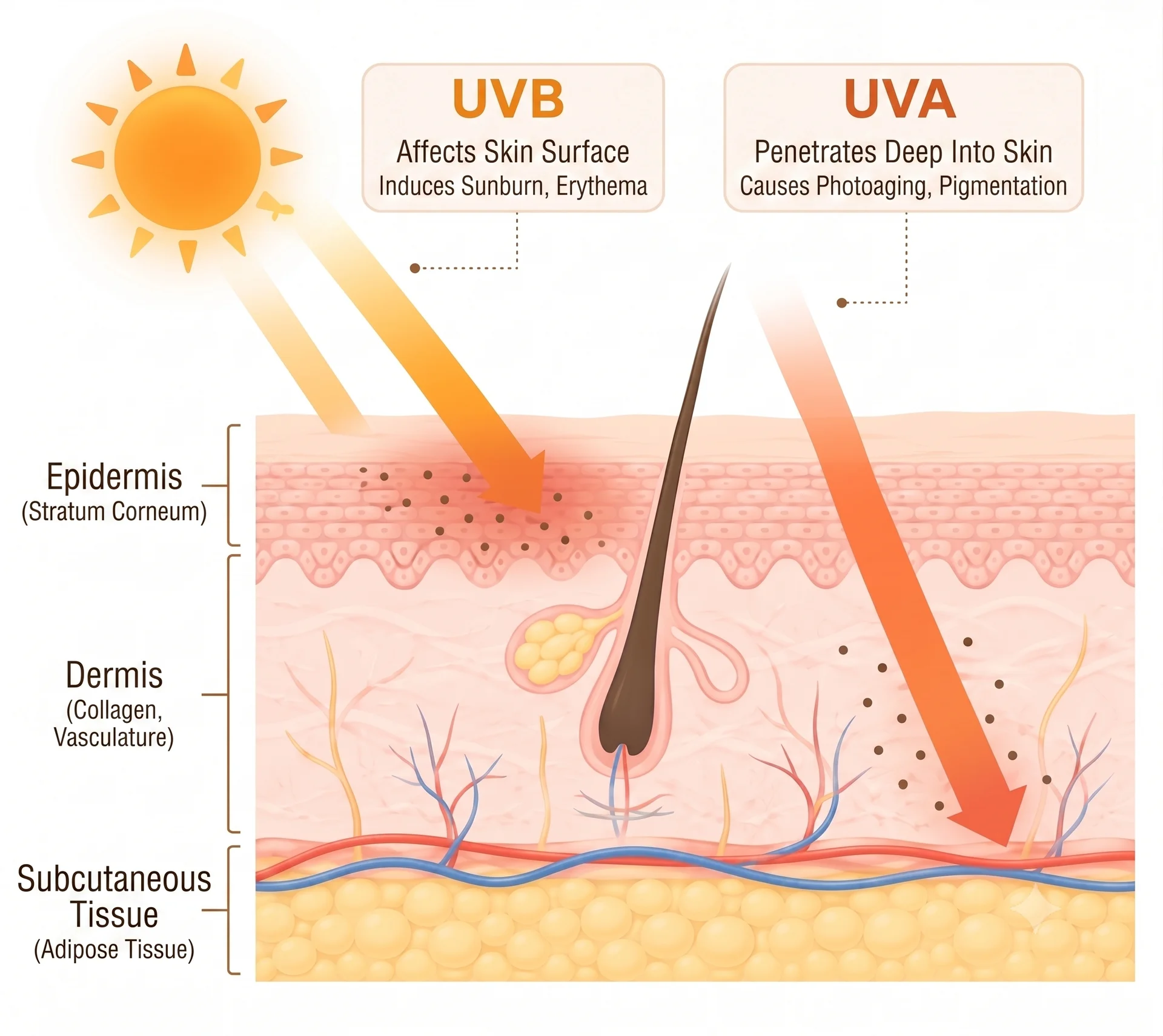
UVB damages the surface; UVA penetrates into the dermis and causes deeper structural injury.
The body responds to UV stress by rapidly producing melanin as a protective mechanism.
When this response is excessive or repeated, melanin can migrate below the basement membrane into the dermis and become fixed pigmentation.
Patients with a pre-existing tendency toward melasma or a weakened barrier are at significantly higher risk of post-UV tone irregularity.
After sunburn, the priority is barrier stabilization and hydration first, not whitening products.
Aggressive exfoliation or strong actives in a compromised state increase pigmentation risk.
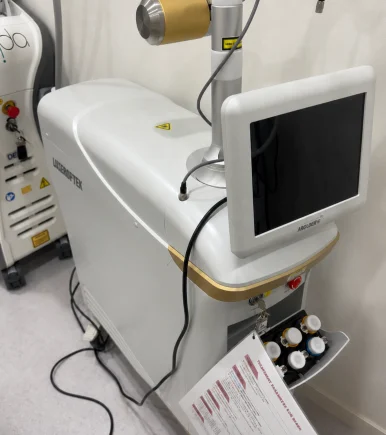
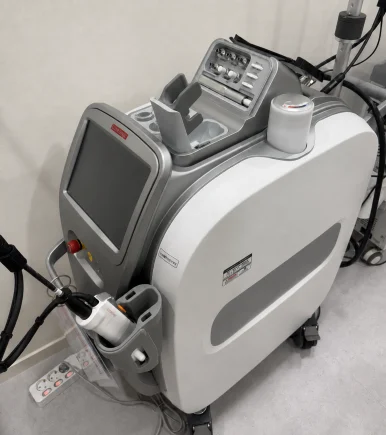
At 4ever Cheongdam Clinic, established pigmentation is addressed using Helios IV (532nm, 785nm, 1064nm) and Clarity2 (dual wavelength), selected based on pigment depth, skin tone, and the presence of concurrent redness.
What Sunburn Actually Is
The term sunburn suggests something minor and temporary.
Clinically, it describes an acute inflammatory response in the skin following excessive UV exposure.
Two UV wavelengths are involved in different ways.
UVB causes direct damage to the skin surface, producing the redness, heat, and tenderness that appear within hours of exposure.
UVA penetrates more deeply, reaching the dermis and causing structural damage that is less immediately visible but more consequential for long-term pigmentation and aging.
In response to both, the skin rapidly activates melanocytes to produce more melanin.
This is the body’s protective mechanism, designed to absorb UV before it causes further damage.
The tan that develops in the days following sun exposure is this process made visible.
The problem arises when UV exposure is intense enough, or repeated often enough, to push this process beyond what the skin can manage in an orderly way.
Why Pigmentation Develops After Sunburn
Post-inflammatory pigmentation following sunburn is not a separate event from the burn itself.
It is a downstream consequence of the same inflammatory process.
When sunburn is severe or repeated, the basement membrane separating the epidermis from the dermis can be compromised.
Under normal conditions, melanin remains in the epidermis where it is gradually shed with normal skin turnover.
When the basement membrane is weakened, melanin can migrate into the dermis, where it is no longer accessible to surface turnover and becomes fixed in the tissue.
This is the mechanism behind the patchy, uneven discoloration that persists weeks after the redness has resolved.
It is also why patients with pre-existing melasma tendencies are particularly vulnerable: UV exposure in skin that already has an overactive melanin response creates conditions for more significant and longer-lasting pigment deposition.
Skin that is repeatedly sunburned over a summer season undergoes this process multiple times.
Each episode adds to the cumulative pigmentation burden.
What to Do in the Days After Sunburn
The instinct to reach for whitening products after sun damage is understandable but misaligned with what the skin actually needs at that stage.
Immediately following UV overexposure, the skin barrier is compromised and the inflammatory response is still active.
Introducing whitening actives, exfoliants, or other stimulating ingredients into damaged skin increases irritation and, in doing so, increases the likelihood of post-inflammatory pigmentation rather than reducing it.
The correct sequence starts with stabilization:
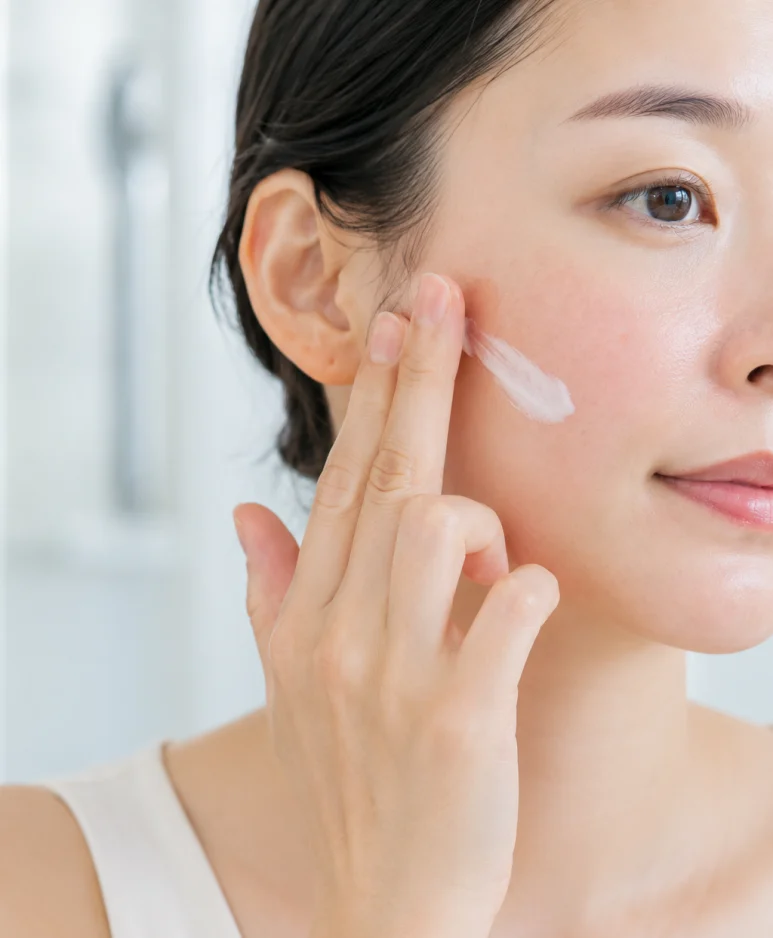
Hydration and moisture retention take priority. UV exposure accelerates transepidermal water loss, and dehydrated skin heals more slowly.
CICA and panthenol are the ingredients most appropriate at this stage.
CICA (centella asiatica) suppresses the inflammatory signaling that drives further melanin production.
Panthenol restores moisture to damaged tissue and supports barrier repair.
Together, they address both sides of post-sunburn skin without adding stimulation.
Sun protection is non-negotiable immediately after sunburn.
Skin that has already been inflamed by UV is more photosensitive than normal, meaning subsequent UV exposure produces a stronger response with less exposure time.
Keeping the skin out of direct sun and reapplying sunscreen consistently is the most important single intervention in the post-sunburn period.
When Pigmentation Has Already Set In
When melanin has migrated into the dermis or when surface pigmentation has become fixed beyond what topical care can address, clinical treatment becomes relevant.
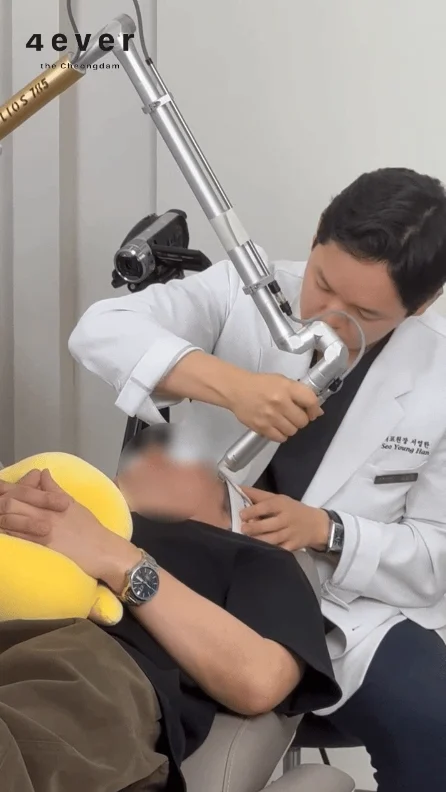
The approach at 4ever Cheongdam Clinic uses two devices, selected and combined based on the individual’s pigmentation profile.
Helios IV
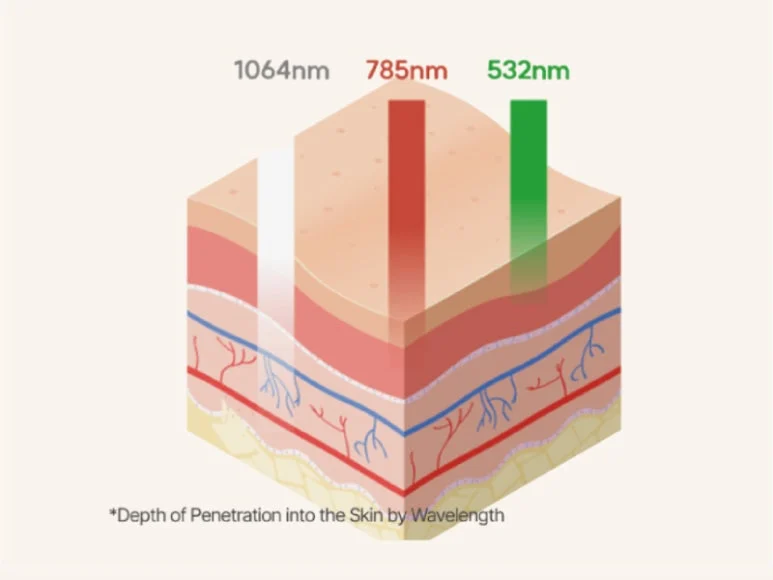
Helios IV operates across three wavelengths: 532nm, 785nm, and 1064nm.
Each wavelength reaches a different depth and targets a different type of pigment, allowing treatment to be calibrated to the specific characteristics of the discoloration being addressed rather than applying a single wavelength across all cases.
The DOE fractional mode within the Helios IV platform adds a rejuvenation layer to the treatment. Rather than targeting only pigmentation, this mode stimulates tissue regeneration simultaneously, producing improvement in skin texture, overall tone, and fine lines alongside the pigmentation correction.
Clarity2
Clarity2 uses a dual wavelength system to address both tone irregularity and concurrent redness in a single session.
A real-time skin temperature monitoring system allows the clinician to track thermal response during treatment, enabling precise energy management that reduces the risk of over-treating already-sensitized skin.
An integrated cooling system minimizes surface discomfort during the procedure.
The governing principle for both devices in the post-sunburn context is the same: the goal is stable, progressive improvement rather than aggressive single-session correction.
Skin that is still reactive from UV damage requires a more conservative energy approach than stable skin, and the assessment of pigment depth, barrier condition, and redness presence all factor into how treatment is designed.
Practical Prevention for the Rest of Summer
The most effective management of summer pigmentation is preventing additional UV accumulation from compounding what has already occurred.
Four habits make the most meaningful difference:
Avoid peak UV hours between 10am and 3pm when UVB intensity is highest.
Reapply sunscreen every two to three hours, and after sweating or swimming regardless of interval.
After outdoor activity, prioritize hydration and cooling before any other skincare step.
When the skin feels hot or tight after sun exposure, focus on calming first and address any other skin concerns only after the acute response has settled.
Sunburn is not simply a temporary cosmetic inconvenience.
Each episode creates an inflammatory event that contributes to cumulative pigmentation, accelerated structural aging, and an increasingly reactive skin environment.
Managing summer sun exposure carefully is not only about avoiding tan lines.
It is about limiting the long-term load that repeated UV injury places on the skin over time.
Frequently Asked Questions
Q. My face looks fine now, but will the pigmentation show up later?
A. Possibly. Post-UV pigmentation often doesn’t appear immediately. Melanin that was produced during the inflammatory response migrates toward the surface over days to weeks, which is why discoloration sometimes seems to develop or worsen after the initial redness has resolved. If UV exposure was significant, monitoring the skin for tone changes over the following month is worthwhile.
Q. How long does post-sunburn pigmentation last if left untreated?
A. It depends on the depth of the pigmentation and whether additional UV exposure occurs in the interim. Surface pigmentation can fade over several months with consistent sun protection and barrier care. Pigmentation that has settled into the dermis tends to be much more persistent and is unlikely to resolve without clinical treatment.
Q. Can I use my regular vitamin C or retinol after sunburn?
A. Not immediately. Both vitamin C and retinoids are active ingredients that can irritate compromised skin. Vitamin C in particular can cause stinging and further disrupt a damaged barrier. After sunburn, wait until the skin has fully returned to its normal baseline before reintroducing actives. This typically takes one to two weeks depending on the severity of the burn.
Q. Is there a difference between the redness that fades and the discoloration that stays?
A. Yes. The immediate redness of sunburn is caused by vascular dilation as part of the inflammatory response. It typically resolves within days as the inflammation subsides. The discoloration that remains afterward is melanin-based pigmentation, which is a separate process and requires different management. If what remains looks brownish or yellowish rather than pink or red, it is almost certainly post-inflammatory pigmentation rather than ongoing inflammation.
Q. When is the right time to start laser treatment after sunburn?
A. Not immediately after the burn. The skin needs to return to a stable, non-reactive baseline before laser energy is applied. Treating actively inflamed or sensitized skin increases the risk of worsening pigmentation and prolonging recovery. At 4ever Cheongdam Clinic, the assessment at consultation includes evaluating whether the skin is ready for treatment, and in cases where it is not, a stabilization period with appropriate home care is recommended first.
Ready to discuss a treatment plan tailored to your skin?
4ever Cheongdam Clinic offers one-to-one consultations with Dr. Younghan Seo.
Book Your Consultation

A few days after a beach trip or a long afternoon outdoors, the redness fades and the skin feels calmer.
For many people, that’s where the story ends. Clinically, it often isn’t.
At 4ever Cheongdam Clinic, Dr. Younghan Seo explains what sunburn actually does to the skin beneath the surface, why pigmentation can follow even after the visible inflammation resolves, and how to approach the skin in the days and weeks after UV exposure.
Key Takeaways
Sunburn is an inflammatory response triggered by UV overexposure.
UVB damages the surface; UVA penetrates into the dermis and causes deeper structural injury.
The body responds to UV stress by rapidly producing melanin as a protective mechanism.
When this response is excessive or repeated, melanin can migrate below the basement membrane into the dermis and become fixed pigmentation.
Patients with a pre-existing tendency toward melasma or a weakened barrier are at significantly higher risk of post-UV tone irregularity.
After sunburn, the priority is barrier stabilization and hydration first, not whitening products.
Aggressive exfoliation or strong actives in a compromised state increase pigmentation risk.
At 4ever Cheongdam Clinic, established pigmentation is addressed using Helios IV (532nm, 785nm, 1064nm) and Clarity2 (dual wavelength), selected based on pigment depth, skin tone, and the presence of concurrent redness.
What Sunburn Actually Is
The term sunburn suggests something minor and temporary.
Clinically, it describes an acute inflammatory response in the skin following excessive UV exposure.
Two UV wavelengths are involved in different ways.
UVB causes direct damage to the skin surface, producing the redness, heat, and tenderness that appear within hours of exposure.
UVA penetrates more deeply, reaching the dermis and causing structural damage that is less immediately visible but more consequential for long-term pigmentation and aging.
In response to both, the skin rapidly activates melanocytes to produce more melanin.
This is the body’s protective mechanism, designed to absorb UV before it causes further damage.
The tan that develops in the days following sun exposure is this process made visible.
The problem arises when UV exposure is intense enough, or repeated often enough, to push this process beyond what the skin can manage in an orderly way.
Why Pigmentation Develops After Sunburn
Post-inflammatory pigmentation following sunburn is not a separate event from the burn itself.
It is a downstream consequence of the same inflammatory process.
When sunburn is severe or repeated, the basement membrane separating the epidermis from the dermis can be compromised.
Under normal conditions, melanin remains in the epidermis where it is gradually shed with normal skin turnover.
When the basement membrane is weakened, melanin can migrate into the dermis, where it is no longer accessible to surface turnover and becomes fixed in the tissue.
This is the mechanism behind the patchy, uneven discoloration that persists weeks after the redness has resolved.
It is also why patients with pre-existing melasma tendencies are particularly vulnerable: UV exposure in skin that already has an overactive melanin response creates conditions for more significant and longer-lasting pigment deposition.
Skin that is repeatedly sunburned over a summer season undergoes this process multiple times.
Each episode adds to the cumulative pigmentation burden.
What to Do in the Days After Sunburn
The instinct to reach for whitening products after sun damage is understandable but misaligned with what the skin actually needs at that stage.
Immediately following UV overexposure, the skin barrier is compromised and the inflammatory response is still active.
Introducing whitening actives, exfoliants, or other stimulating ingredients into damaged skin increases irritation and, in doing so, increases the likelihood of post-inflammatory pigmentation rather than reducing it.
The correct sequence starts with stabilization:
Hydration and moisture retention take priority. UV exposure accelerates transepidermal water loss, and dehydrated skin heals more slowly.
CICA and panthenol are the ingredients most appropriate at this stage.
CICA (centella asiatica) suppresses the inflammatory signaling that drives further melanin production.
Panthenol restores moisture to damaged tissue and supports barrier repair.
Together, they address both sides of post-sunburn skin without adding stimulation.
Sun protection is non-negotiable immediately after sunburn.
Skin that has already been inflamed by UV is more photosensitive than normal, meaning subsequent UV exposure produces a stronger response with less exposure time.
Keeping the skin out of direct sun and reapplying sunscreen consistently is the most important single intervention in the post-sunburn period.
When Pigmentation Has Already Set In
When melanin has migrated into the dermis or when surface pigmentation has become fixed beyond what topical care can address, clinical treatment becomes relevant.
The approach at 4ever Cheongdam Clinic uses two devices, selected and combined based on the individual’s pigmentation profile.
Helios IV
Helios IV operates across three wavelengths: 532nm, 785nm, and 1064nm.
Each wavelength reaches a different depth and targets a different type of pigment, allowing treatment to be calibrated to the specific characteristics of the discoloration being addressed rather than applying a single wavelength across all cases.
The DOE fractional mode within the Helios IV platform adds a rejuvenation layer to the treatment. Rather than targeting only pigmentation, this mode stimulates tissue regeneration simultaneously, producing improvement in skin texture, overall tone, and fine lines alongside the pigmentation correction.
Clarity2
Clarity2 uses a dual wavelength system to address both tone irregularity and concurrent redness in a single session.
A real-time skin temperature monitoring system allows the clinician to track thermal response during treatment, enabling precise energy management that reduces the risk of over-treating already-sensitized skin.
An integrated cooling system minimizes surface discomfort during the procedure.
The governing principle for both devices in the post-sunburn context is the same: the goal is stable, progressive improvement rather than aggressive single-session correction.
Skin that is still reactive from UV damage requires a more conservative energy approach than stable skin, and the assessment of pigment depth, barrier condition, and redness presence all factor into how treatment is designed.
Practical Prevention for the Rest of Summer
The most effective management of summer pigmentation is preventing additional UV accumulation from compounding what has already occurred.
Four habits make the most meaningful difference:
Avoid peak UV hours between 10am and 3pm when UVB intensity is highest.
Reapply sunscreen every two to three hours, and after sweating or swimming regardless of interval.
After outdoor activity, prioritize hydration and cooling before any other skincare step.
When the skin feels hot or tight after sun exposure, focus on calming first and address any other skin concerns only after the acute response has settled.
Sunburn is not simply a temporary cosmetic inconvenience.
Each episode creates an inflammatory event that contributes to cumulative pigmentation, accelerated structural aging, and an increasingly reactive skin environment.
Managing summer sun exposure carefully is not only about avoiding tan lines.
It is about limiting the long-term load that repeated UV injury places on the skin over time.
Frequently Asked Questions
Q. My face looks fine now, but will the pigmentation show up later?
A. Possibly. Post-UV pigmentation often doesn’t appear immediately. Melanin that was produced during the inflammatory response migrates toward the surface over days to weeks, which is why discoloration sometimes seems to develop or worsen after the initial redness has resolved. If UV exposure was significant, monitoring the skin for tone changes over the following month is worthwhile.
Q. How long does post-sunburn pigmentation last if left untreated?
A. It depends on the depth of the pigmentation and whether additional UV exposure occurs in the interim. Surface pigmentation can fade over several months with consistent sun protection and barrier care. Pigmentation that has settled into the dermis tends to be much more persistent and is unlikely to resolve without clinical treatment.
Q. Can I use my regular vitamin C or retinol after sunburn?
A. Not immediately. Both vitamin C and retinoids are active ingredients that can irritate compromised skin. Vitamin C in particular can cause stinging and further disrupt a damaged barrier. After sunburn, wait until the skin has fully returned to its normal baseline before reintroducing actives. This typically takes one to two weeks depending on the severity of the burn.
Q. Is there a difference between the redness that fades and the discoloration that stays?
A. Yes. The immediate redness of sunburn is caused by vascular dilation as part of the inflammatory response. It typically resolves within days as the inflammation subsides. The discoloration that remains afterward is melanin-based pigmentation, which is a separate process and requires different management. If what remains looks brownish or yellowish rather than pink or red, it is almost certainly post-inflammatory pigmentation rather than ongoing inflammation.
Q. When is the right time to start laser treatment after sunburn?
A. Not immediately after the burn. The skin needs to return to a stable, non-reactive baseline before laser energy is applied. Treating actively inflamed or sensitized skin increases the risk of worsening pigmentation and prolonging recovery. At 4ever Cheongdam Clinic, the assessment at consultation includes evaluating whether the skin is ready for treatment, and in cases where it is not, a stabilization period with appropriate home care is recommended first.
Ready to discuss a treatment plan tailored to your skin?
4ever Cheongdam Clinic offers one-to-one consultations with Dr. Younghan Seo.
Book Your Consultation