According to Jeisys Medical, the Density Boost tip is the first Density tip to deliver bipolar radiofrequency (RF) only. The company describes bipolar RF as targeting the shallower layers of the skin, so a bipolar-only tip is generally considered when the concern lies in those layers. The Alpha tip delivers both monopolar and bipolar RF, so its energy reaches the deeper layers as well. Whether the Boost tip is used on its own or together with another tip is decided after your skin is examined.
What is the Density Boost tip?
The Boost tip is a single-use treatment tip for Density Noir, a radiofrequency device made by the Korean company Jeisys Medical. On 4 September 2026, Jeisys announced that Density Noir and the Boost tip had received approval from Korea’s Ministry of Food and Drug Safety (MFDS). The company describes the Boost tip as a dedicated consumable for Density Noir (Medical Newspaper, in Korean).
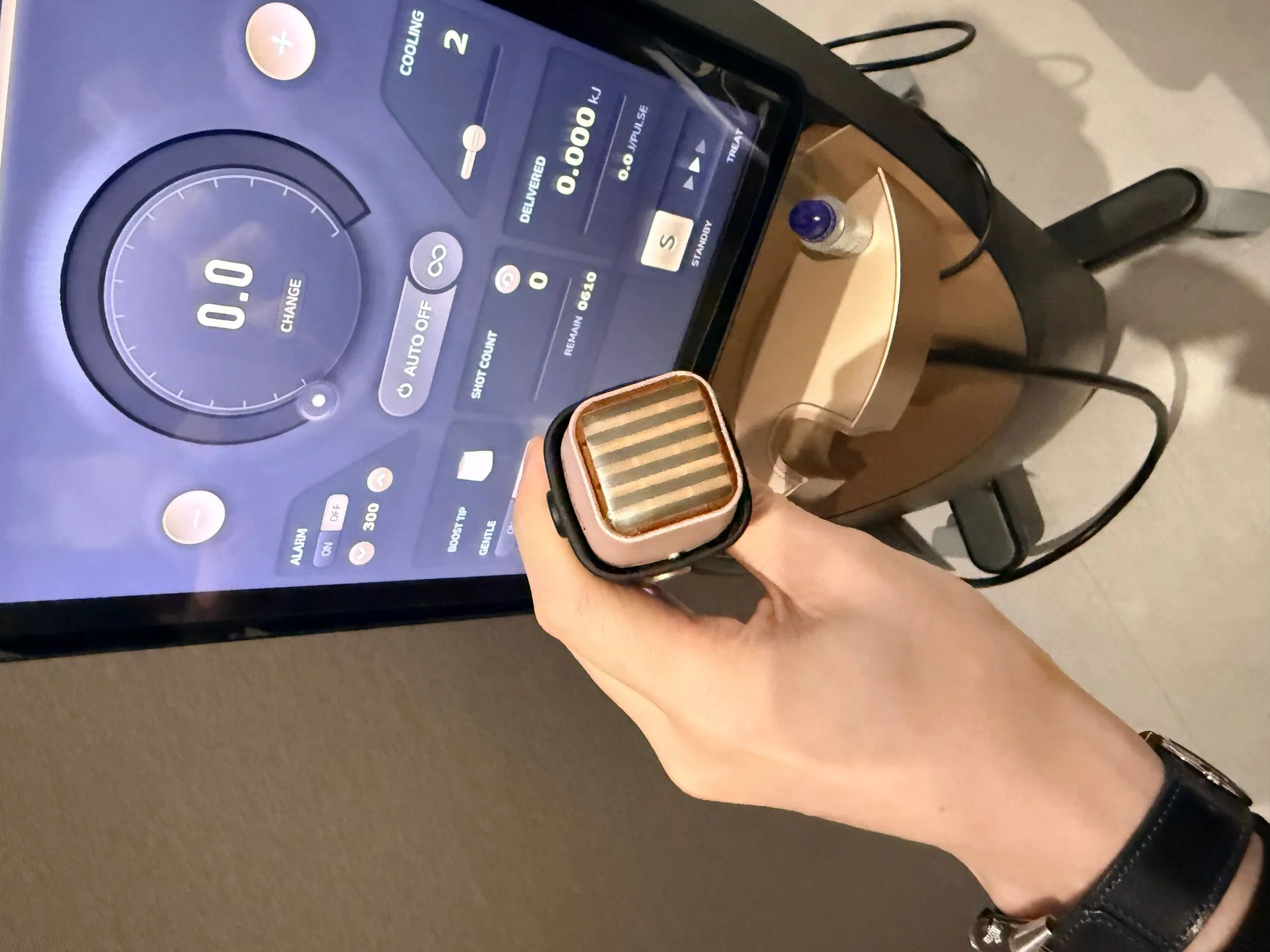 Energy: bipolar RF only
- Place in the line: the first Density tip designed to deliver bipolar RF alone, according to the company
- Device: Density Noir, which Korean press reports describe as the successor to Density High. What changed in the device itself is covered in our article on Density Noir
- Use: single-use. The manufacturer states that a genuine Density tip is used for one person only (Jeisys Density page, in Korean)
- Korean register: the Korean register lists Density Noir (제허 24-114) for non-invasive treatment of wrinkles around the eyes and on the face. The Boost tip is one of its tips
How is the Boost tip different from the Alpha tip?
The difference is which kind of RF each tip delivers, and so how deep the heat goes. “Monopolar” and “bipolar” describe the path the electric current takes through the skin. The manufacturer describes monopolar RF as reaching the deeper skin layers and bipolar RF as targeting the shallower ones.
- Alpha tip: delivers monopolar and bipolar RF in sequence, so the energy covers both deeper and shallower layers. A Korean press report describes it as the third-generation Density tip (Medical Newspaper, in Korean), with a wider electrode surface, as covered in our earlier article on the Density Alpha tip
- Boost tip: delivers bipolar RF only, so the energy is kept to the shallower layers
- Classic tip: delivers monopolar RF only
- High tip: delivers monopolar and bipolar RF
A simple way to picture it: the Alpha tip spreads heat across several floors of a building, while the Boost tip keeps it on the upper floors.
When is the Boost tip considered?
According to the manufacturer, bipolar RF targets the shallower layers of the skin, so a tip that delivers bipolar RF only is generally considered when the concern lies in those layers. Which tip is used is decided after an examination.
At 4ever the Cheongdam, the doctor looks at skin thickness and condition and at previous treatments, and then decides whether to use the Boost tip on its own or with another tip.
A consultation for an RF treatment is likely to cover:
- Where the concern is: around the eyes, on other parts of the face, or both
- Skin thickness and condition: assessed at the consultation
- Previous treatments: fillers, threads, or other energy-based treatments in the same area, and when they were done
- The rest of the plan: what else is planned for the same session
A tip is one choice among several. Which tip is used, at what level, and on which area are decided together.
How does the clinic decide between the Boost tip alone and a combination?
Whether the Boost tip is used alone or with another tip is decided after examination. There is no default. With the Boost tip added, the Density line now has monopolar-only, combined, and bipolar-only tips. More options mean more ways to plan a session, so deciding what to leave out matters as much as deciding what to add.
- Mode settings: Density Noir adds Gentle mode, which lets the doctor choose the tip press depth at which energy is released, and Infinity mode, which outputs energy continuously at a set level
- Heat control: the device cools the skin surface while heat builds below it. How this is managed is explained in our article on heat control during RF treatment
How can you check the device and tip used on you?
You can check both yourself. The Korean device approval is public, and the manufacturer labels its genuine tips.
| What to check | Where to check | What to look for |
|---|
| Device approval | MFDS medical device portal, emedi.mfds.go.kr | Search 제허 24-114, typed exactly as written, including the Korean characters |
| Device record | The same record | Coagulating tissue with high-frequency current for non-invasive treatment of wrinkles around the eyes and on the face |
| Genuine tip | The tip packaging | The authenticity label and number, according to the manufacturer |
| Single use | Before your session | A new tip opened for you |
- What the prefix means: 제허 (jeheo) is a manufacturing approval for a device made in Korea
- What the approval covers: it allows the device to be made and sold for the stated purpose
- What to ask: you can ask to see the tip and its packaging before the session starts
What should you plan for if you are visiting from abroad?
Plan for the consultation as much as for the session itself. The tip choice depends on what the doctor sees in person, so arrive with your history ready.
- Your treatment history: a list of fillers, threads, or energy-based treatments in the same area, with dates
- Your medications: names and doses, written down
- Your departure date: tell the clinic at the consultation so the session and any follow-up fit your stay
- The rest of the day: redness and warmth are commonly reported right after RF treatment, so keep that day light
- After you leave Korea: ask how the clinic would like to hear from you if you have questions once you are home
What side effects should you know about?
Redness and a feeling of warmth in the treated area are commonly reported after RF treatment. Because the heat is produced inside the skin, the reactions to watch for are related to heat. The clinic’s written aftercare instructions come first.
| What may happen | What to do |
|---|
| Redness and warmth in the treated area | Follow the aftercare sheet. Avoid saunas, hot baths, and intense exercise for the period the clinic sets |
| Mild swelling or tenderness | Tell the clinic if it increases instead of settling |
| Blisters, crusting, or a mark that darkens | Contact the clinic promptly. Do not treat it yourself |
| A change in sensation that persists | Contact the clinic |
Before treatment, tell the clinic about any medication you take, any implanted electronic device such as a pacemaker, any metal implant in the treatment area, whether you are pregnant, and any recent treatment in the same area. Whether this treatment suits you is a clinical judgment your doctor makes after examining you.
Frequently asked questions
Does the Boost tip hurt?
Most people feel warmth with each pulse. The manufacturer states that Density adjusts its cooling to the skin temperature after each shot to reduce discomfort. Sensitivity differs between people, so ask at the consultation whether a numbing cream will be used.
How long does redness last after a Boost tip session?
Redness and warmth usually settle as the skin recovers, and the time it takes varies from person to person. Ask the clinic what to expect for the areas being treated. Contact the clinic if the redness increases instead of fading.
Can I fly home the day after treatment?
Tell the clinic your flight date at the consultation. The doctor can then plan the session and your aftercare around your departure.
How many Boost tip sessions will I need?
There is no fixed number. The manufacturer notes that the right number of shots depends on skin condition and the treatment area, and the doctor plans sessions after examining you.
Can the Boost tip be used in the same session as another Density tip?
That depends on your plan. The clinic decides whether to use the Boost tip alone or with another Density tip after examining your skin, based on which layers the plan needs to reach.
Is the Boost tip the same thing as Density Noir?
No. Density Noir is the device, and the Boost tip is a single-use tip used with it. The changes to the device are covered in our article on Density Noir.
This article is general information about a treatment offered at 4ever the Cheongdam. It is not medical advice and does not replace consultation with a doctor who has examined you. Product approvals, regulations, and clinic practices change; please confirm anything that affects a decision with the clinic directly.
Sources: Korean Ministry of Food and Drug Safety, medical device register, emedi.mfds.go.kr (record 제허 24-114). Jeisys Medical, Density product page (manufacturer’s description; retrieved 28 October 2026). Medical Newspaper, report on Density Noir and the Boost tip, 4 September 2026.
4ever the Cheongdam
99-23 Cheongdam-dong, Gangnam-gu, Seoul, Korea
서울 강남구 청담동 99-23 (copy this line into Naver Map, Kakao Map, or show it to a taxi driver)
Tel. +82-2-518-7705

According to Jeisys Medical, the Density Boost tip is the first Density tip to deliver bipolar radiofrequency (RF) only. The company describes bipolar RF as targeting the shallower layers of the skin, so a bipolar-only tip is generally considered when the concern lies in those layers. The Alpha tip delivers both monopolar and bipolar RF, so its energy reaches the deeper layers as well. Whether the Boost tip is used on its own or together with another tip is decided after your skin is examined.
What is the Density Boost tip?
The Boost tip is a single-use treatment tip for Density Noir, a radiofrequency device made by the Korean company Jeisys Medical. On 4 September 2026, Jeisys announced that Density Noir and the Boost tip had received approval from Korea’s Ministry of Food and Drug Safety (MFDS). The company describes the Boost tip as a dedicated consumable for Density Noir (Medical Newspaper, in Korean).
How is the Boost tip different from the Alpha tip?
The difference is which kind of RF each tip delivers, and so how deep the heat goes. “Monopolar” and “bipolar” describe the path the electric current takes through the skin. The manufacturer describes monopolar RF as reaching the deeper skin layers and bipolar RF as targeting the shallower ones.
A simple way to picture it: the Alpha tip spreads heat across several floors of a building, while the Boost tip keeps it on the upper floors.
When is the Boost tip considered?
According to the manufacturer, bipolar RF targets the shallower layers of the skin, so a tip that delivers bipolar RF only is generally considered when the concern lies in those layers. Which tip is used is decided after an examination.
At 4ever the Cheongdam, the doctor looks at skin thickness and condition and at previous treatments, and then decides whether to use the Boost tip on its own or with another tip.
A consultation for an RF treatment is likely to cover:
A tip is one choice among several. Which tip is used, at what level, and on which area are decided together.
How does the clinic decide between the Boost tip alone and a combination?
Whether the Boost tip is used alone or with another tip is decided after examination. There is no default. With the Boost tip added, the Density line now has monopolar-only, combined, and bipolar-only tips. More options mean more ways to plan a session, so deciding what to leave out matters as much as deciding what to add.
How can you check the device and tip used on you?
You can check both yourself. The Korean device approval is public, and the manufacturer labels its genuine tips.
What should you plan for if you are visiting from abroad?
Plan for the consultation as much as for the session itself. The tip choice depends on what the doctor sees in person, so arrive with your history ready.
What side effects should you know about?
Redness and a feeling of warmth in the treated area are commonly reported after RF treatment. Because the heat is produced inside the skin, the reactions to watch for are related to heat. The clinic’s written aftercare instructions come first.
Before treatment, tell the clinic about any medication you take, any implanted electronic device such as a pacemaker, any metal implant in the treatment area, whether you are pregnant, and any recent treatment in the same area. Whether this treatment suits you is a clinical judgment your doctor makes after examining you.
Frequently asked questions
Does the Boost tip hurt?
Most people feel warmth with each pulse. The manufacturer states that Density adjusts its cooling to the skin temperature after each shot to reduce discomfort. Sensitivity differs between people, so ask at the consultation whether a numbing cream will be used.
How long does redness last after a Boost tip session?
Redness and warmth usually settle as the skin recovers, and the time it takes varies from person to person. Ask the clinic what to expect for the areas being treated. Contact the clinic if the redness increases instead of fading.
Can I fly home the day after treatment?
Tell the clinic your flight date at the consultation. The doctor can then plan the session and your aftercare around your departure.
How many Boost tip sessions will I need?
There is no fixed number. The manufacturer notes that the right number of shots depends on skin condition and the treatment area, and the doctor plans sessions after examining you.
Can the Boost tip be used in the same session as another Density tip?
That depends on your plan. The clinic decides whether to use the Boost tip alone or with another Density tip after examining your skin, based on which layers the plan needs to reach.
Is the Boost tip the same thing as Density Noir?
No. Density Noir is the device, and the Boost tip is a single-use tip used with it. The changes to the device are covered in our article on Density Noir.
This article is general information about a treatment offered at 4ever the Cheongdam. It is not medical advice and does not replace consultation with a doctor who has examined you. Product approvals, regulations, and clinic practices change; please confirm anything that affects a decision with the clinic directly.
Sources: Korean Ministry of Food and Drug Safety, medical device register, emedi.mfds.go.kr (record 제허 24-114). Jeisys Medical, Density product page (manufacturer’s description; retrieved 28 October 2026). Medical Newspaper, report on Density Noir and the Boost tip, 4 September 2026.
4ever the Cheongdam
99-23 Cheongdam-dong, Gangnam-gu, Seoul, Korea
서울 강남구 청담동 99-23 (copy this line into Naver Map, Kakao Map, or show it to a taxi driver)
Tel. +82-2-518-7705