Two kinds of ingredients sit at the center of Celexo RCM (세렉소 RCM in Korean), a professional skin booster from the Korean company ABio Materials: recombinant collagen and exosomes from lactic acid bacteria. According to the manufacturer’s product page, the collagen is type I and type III, the exosomes come from three lactobacillus strains the company developed, and the formula also lists vitamin B12. The letters RCM stand for Rebuilding Collagen Matrix, a name that points to the layer of skin the formula was designed around.
What is Celexo RCM?
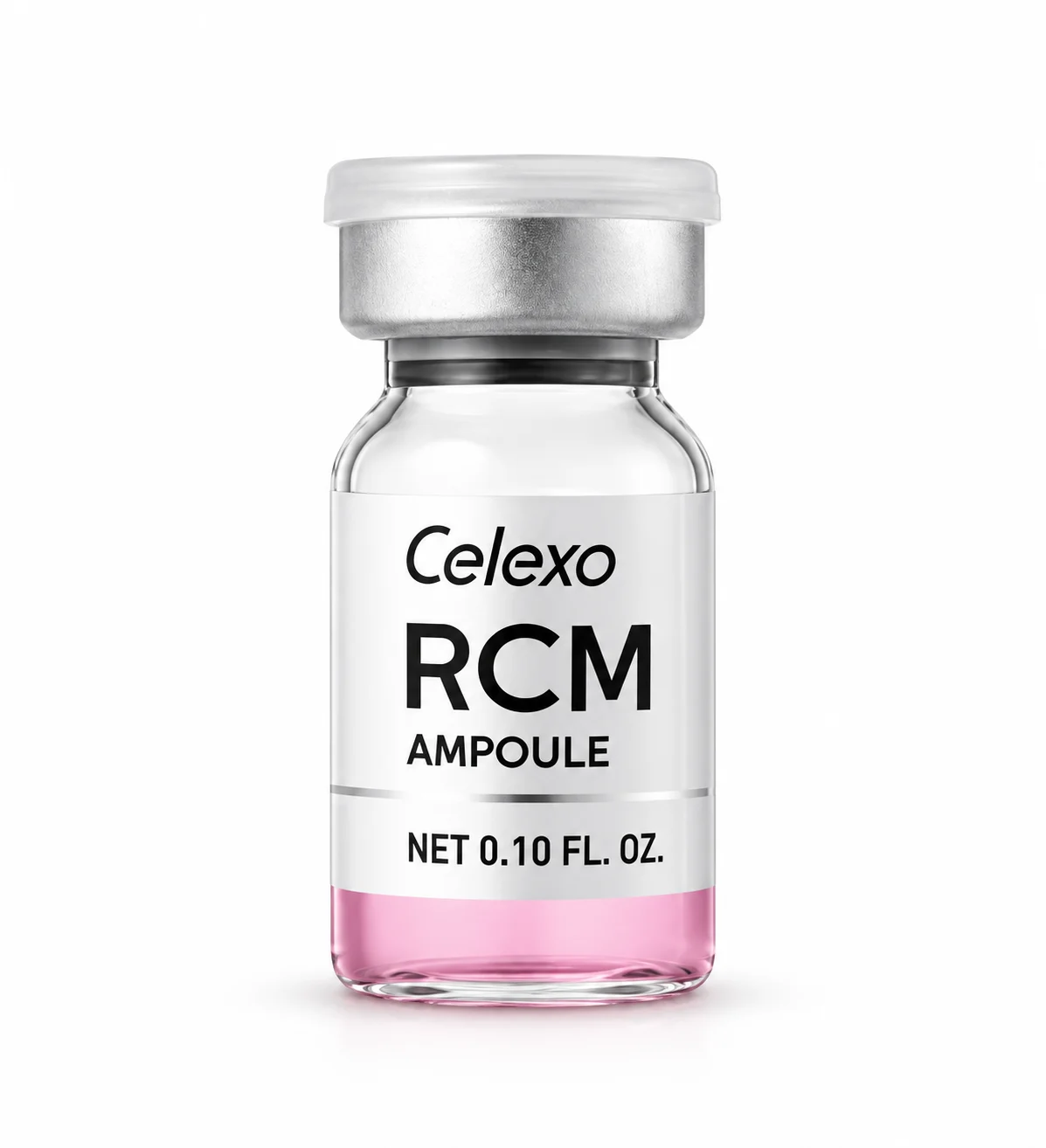
Celexo RCM is one product in the Celexo line, a family of skin and hair boosters made for professional use in clinics. Each product in the family has its own formula, so it helps to name the exact product when you ask a clinic about it.
- Maker: ABio Materials Co., Ltd., a biomaterials company based in Gyeonggi Province, South Korea
- Product family: Celexo, which the manufacturer’s English site lists alongside Exo-Cica, Black Label, AAPE, HG, and others
- Name in Korea: 세렉소 RCM. Showing this name to a clinic in Korea avoids confusion with other Celexo products
- Form: supplied in vials for use by medical professionals
- Meaning of RCM: Rebuilding Collagen Matrix
The name describes what the manufacturer designed the formula around: the collagen network that sits in the deeper layer of the skin. The sections below explain each part of the formula in plain terms.
What does the manufacturer list as the ingredients of Celexo RCM?
The manufacturer lists three main components: dual recombinant collagen, exosomes from three lactic acid bacteria strains, and vitamin B12. It calls the combination a “Multi-ECM Formula.”
| Component | What the manufacturer states | What it means in plain terms |
|---|
| Recombinant collagen type I | The main collagen in the formula | Type I is the collagen that forms the firm supporting fibers of the skin |
| Recombinant collagen type III | Paired with type I in the formula | Type III forms finer, more flexible fibers between the type I fibers |
| Exosomes from three lactobacillus strains | Strains developed by the company | Tiny particles released by lactic acid bacteria during culture |
| Vitamin B12 | Listed on the product page as an antioxidant ingredient | A water-soluble vitamin |
Sources: Celexo RCM product page (Korean), Celexo English site
Why does Celexo RCM pair type I and type III collagen, and what is the ECM?
Type I and type III are the two main collagens in the dermis, and the manufacturer says it combined them to reflect the skin’s own collagen makeup. Type I works like the main beams of a structure. Type III fills the spaces between those beams with finer, more flexible fibers.
Both sit inside the extracellular matrix, or ECM. The ECM is the material between skin cells that holds the dermis together. It includes:
- Collagen fibers, which give the dermis its structure
- Elastic fibers, which let skin stretch and return
- Hyaluronic acid and similar molecules, which hold water
- Linking proteins, which connect cells to the surrounding matrix
“Recombinant” describes how the collagen is made. Instead of being extracted from animal skin or bone, recombinant collagen is produced by placing the instructions for a collagen protein into production cells, such as yeast or bacteria, which then make the protein.
Where do the exosomes in Celexo RCM come from?
The exosomes in Celexo RCM come from lactic acid bacteria, also called lactobacillus. The manufacturer says it uses three strains that it developed itself.
An exosome is a very small particle, surrounded by a thin membrane, that cells release to carry proteins and other molecules to nearby cells. Researchers often use the broader term “extracellular vesicles” for particles released by bacteria, while skincare makers usually call all of them exosomes. You may see either term.
- Source in RCM: lactic acid bacteria, the same family of bacteria used to ferment foods such as yogurt and kimchi
- Number of strains: three, according to the manufacturer
- Not taken from human cells: the source is bacterial culture
- Source varies by product: other Celexo products use other sources
The exosome source differs between products in the Celexo family. Exo-Cica, for example, uses exosomes from a plant. Our earlier article, Are Celexo Exosomes Plant-Derived or Human-Derived, and Where Do They Come From?, explains how the source is described for that product.
How much does a Celexo RCM treatment hurt?
How much a skin booster treatment hurts varies from person to person, and it depends mostly on how the product goes into the skin.
The main factors are:
- Needle size: finer needles usually cause less discomfort
- Thickness of the formula: a thicker liquid needs more pressure to inject
- Amount at each point: a larger amount placed at one point stretches the skin more
- Area treated: thin skin, such as around the eyes and mouth, tends to feel more sensitive
- Your own sensitivity: this changes with sleep, stress, and the menstrual cycle
If pain is a concern, ask the clinic about it before your treatment. You can also ask to pause during the treatment. Saying so at the start helps the doctor plan the pace.
How should you plan a Celexo RCM treatment if you are visiting Korea?
Plan for a consultation first, because the treatment plan follows the skin examination. At 4ever the Cheongdam, Dr. Younghan Seo examines the skin before treatment, since how RCM is used and whether it is combined with other treatments depends on the condition of the skin.
When you plan your trip, consider these points:
- Allow time after the treatment: redness or small marks may be visible for a short time, so avoid scheduling important photos or events right after
- Bring a list: write down any medication you take and any treatment you have had on your face, with approximate dates
- Use the Korean name: 세렉소 RCM helps make sure you and the clinic mean the same product
- Ask for written aftercare: keep the instructions so you can follow them after you leave Korea
- Pack sun protection: a hat and sunscreen help protect treated skin while you travel
If you plan more than one session, ask the clinic how the sessions would be spaced. That spacing decides whether everything fits into one trip.
What should you know about side effects?
Most reactions after a skin booster treatment are mild and short-lived, but they do happen. Swelling, redness, and small bruises at the treatment points are commonly reported after injected skin boosters, and they usually settle on their own.
| Reaction | What it may look like | What to do |
|---|
| Redness | Pink or red skin over the treated area | Keep the area clean and avoid heat, saunas, and hard exercise until it settles |
| Swelling | Puffiness, often more noticeable the next morning | Avoid rubbing the area; follow the clinic’s aftercare instructions |
| Small bruises | Pinpoint purple or blue marks at injection points | They usually fade over several days; makeup can cover them once the clinic allows it |
| Small bumps | Raised spots where the product was placed | Do not press or massage them unless the clinic tells you to |
| Signs to report | Pain that gets worse, warmth, spreading redness, pus, itching with a rash, or fever | Contact the clinic promptly |
Tell the clinic about any allergies, any medication you take, including blood thinners and supplements that affect bleeding, and any prior treatment in the same area. These details affect both bruising and the overall plan.
Whether this treatment suits you is a clinical judgment your doctor makes after examining you.
Frequently asked questions
Is Celexo RCM made from human or animal ingredients?
According to the manufacturer, the exosomes in Celexo RCM come from lactic acid bacteria, not from human cells. The manufacturer describes the collagen as recombinant. If you have concerns about specific ingredients or allergies, tell the clinic before your treatment.
How long does redness last after a Celexo RCM treatment?
Redness after a skin booster treatment usually fades within a short time, but it varies with your skin and the method used. Sensitive skin may stay pink longer. Ask the clinic what to expect for your plan, so you can schedule around it.
Can I fly the day after a Celexo RCM treatment?
Ask the clinic about timing before you choose your flight date, since it depends on how your skin reacts and on the method used. Cabin air is dry, so bring a moisturizer the clinic recommends. Also keep your aftercare instructions and the clinic’s phone number with you.
How many Celexo RCM sessions will I need?
There is no fixed number of sessions for everyone. The doctor plans the number and spacing of sessions after examining your skin. If you are visiting from abroad, tell the clinic how long you will stay, so the plan can fit your trip.
Can I wear makeup after a Celexo RCM treatment?
Follow the clinic’s instructions on when to start wearing makeup again. The timing can differ depending on your skin and the method used. When you do start, use clean brushes or sponges.
Can Celexo RCM be combined with other treatments?
It can be, depending on your skin. The doctor decides whether to use RCM alone or with another treatment, and in what order, after the examination. Tell the clinic about any treatment you plan to have elsewhere during your trip.
This article is general information about a treatment offered at 4ever the Cheongdam. It is not medical advice and does not replace consultation with a doctor who has examined you. Product approvals, regulations, and clinic practices change; please confirm anything that affects a decision with the clinic directly.
4ever the Cheongdam
99-23 Cheongdam-dong, Gangnam-gu, Seoul, Korea
서울 강남구 청담동 99-23 (copy this line into Naver Map, Kakao Map, or show it to a taxi driver)
Tel. +82-2-518-7705

Two kinds of ingredients sit at the center of Celexo RCM (세렉소 RCM in Korean), a professional skin booster from the Korean company ABio Materials: recombinant collagen and exosomes from lactic acid bacteria. According to the manufacturer’s product page, the collagen is type I and type III, the exosomes come from three lactobacillus strains the company developed, and the formula also lists vitamin B12. The letters RCM stand for Rebuilding Collagen Matrix, a name that points to the layer of skin the formula was designed around.
What is Celexo RCM?
Celexo RCM is one product in the Celexo line, a family of skin and hair boosters made for professional use in clinics. Each product in the family has its own formula, so it helps to name the exact product when you ask a clinic about it.
The name describes what the manufacturer designed the formula around: the collagen network that sits in the deeper layer of the skin. The sections below explain each part of the formula in plain terms.
What does the manufacturer list as the ingredients of Celexo RCM?
The manufacturer lists three main components: dual recombinant collagen, exosomes from three lactic acid bacteria strains, and vitamin B12. It calls the combination a “Multi-ECM Formula.”
Sources: Celexo RCM product page (Korean), Celexo English site
Why does Celexo RCM pair type I and type III collagen, and what is the ECM?
Type I and type III are the two main collagens in the dermis, and the manufacturer says it combined them to reflect the skin’s own collagen makeup. Type I works like the main beams of a structure. Type III fills the spaces between those beams with finer, more flexible fibers.
Both sit inside the extracellular matrix, or ECM. The ECM is the material between skin cells that holds the dermis together. It includes:
“Recombinant” describes how the collagen is made. Instead of being extracted from animal skin or bone, recombinant collagen is produced by placing the instructions for a collagen protein into production cells, such as yeast or bacteria, which then make the protein.
Where do the exosomes in Celexo RCM come from?
The exosomes in Celexo RCM come from lactic acid bacteria, also called lactobacillus. The manufacturer says it uses three strains that it developed itself.
An exosome is a very small particle, surrounded by a thin membrane, that cells release to carry proteins and other molecules to nearby cells. Researchers often use the broader term “extracellular vesicles” for particles released by bacteria, while skincare makers usually call all of them exosomes. You may see either term.
The exosome source differs between products in the Celexo family. Exo-Cica, for example, uses exosomes from a plant. Our earlier article, Are Celexo Exosomes Plant-Derived or Human-Derived, and Where Do They Come From?, explains how the source is described for that product.
How much does a Celexo RCM treatment hurt?
How much a skin booster treatment hurts varies from person to person, and it depends mostly on how the product goes into the skin.
The main factors are:
If pain is a concern, ask the clinic about it before your treatment. You can also ask to pause during the treatment. Saying so at the start helps the doctor plan the pace.
How should you plan a Celexo RCM treatment if you are visiting Korea?
Plan for a consultation first, because the treatment plan follows the skin examination. At 4ever the Cheongdam, Dr. Younghan Seo examines the skin before treatment, since how RCM is used and whether it is combined with other treatments depends on the condition of the skin.
When you plan your trip, consider these points:
If you plan more than one session, ask the clinic how the sessions would be spaced. That spacing decides whether everything fits into one trip.
What should you know about side effects?
Most reactions after a skin booster treatment are mild and short-lived, but they do happen. Swelling, redness, and small bruises at the treatment points are commonly reported after injected skin boosters, and they usually settle on their own.
Tell the clinic about any allergies, any medication you take, including blood thinners and supplements that affect bleeding, and any prior treatment in the same area. These details affect both bruising and the overall plan.
Whether this treatment suits you is a clinical judgment your doctor makes after examining you.
Frequently asked questions
Is Celexo RCM made from human or animal ingredients?
According to the manufacturer, the exosomes in Celexo RCM come from lactic acid bacteria, not from human cells. The manufacturer describes the collagen as recombinant. If you have concerns about specific ingredients or allergies, tell the clinic before your treatment.
How long does redness last after a Celexo RCM treatment?
Redness after a skin booster treatment usually fades within a short time, but it varies with your skin and the method used. Sensitive skin may stay pink longer. Ask the clinic what to expect for your plan, so you can schedule around it.
Can I fly the day after a Celexo RCM treatment?
Ask the clinic about timing before you choose your flight date, since it depends on how your skin reacts and on the method used. Cabin air is dry, so bring a moisturizer the clinic recommends. Also keep your aftercare instructions and the clinic’s phone number with you.
How many Celexo RCM sessions will I need?
There is no fixed number of sessions for everyone. The doctor plans the number and spacing of sessions after examining your skin. If you are visiting from abroad, tell the clinic how long you will stay, so the plan can fit your trip.
Can I wear makeup after a Celexo RCM treatment?
Follow the clinic’s instructions on when to start wearing makeup again. The timing can differ depending on your skin and the method used. When you do start, use clean brushes or sponges.
Can Celexo RCM be combined with other treatments?
It can be, depending on your skin. The doctor decides whether to use RCM alone or with another treatment, and in what order, after the examination. Tell the clinic about any treatment you plan to have elsewhere during your trip.
This article is general information about a treatment offered at 4ever the Cheongdam. It is not medical advice and does not replace consultation with a doctor who has examined you. Product approvals, regulations, and clinic practices change; please confirm anything that affects a decision with the clinic directly.
4ever the Cheongdam
99-23 Cheongdam-dong, Gangnam-gu, Seoul, Korea
서울 강남구 청담동 99-23 (copy this line into Naver Map, Kakao Map, or show it to a taxi driver)
Tel. +82-2-518-7705