Potenza is one radiofrequency (RF) device that works with interchangeable tips, and the tip decides where and how the energy enters the skin. Needle tips differ in the number of needles, their thickness, and whether the needle shaft is insulated. One needle tip also injects an ingredient as it delivers energy, and a separate group of tips delivers RF from the skin surface without needles. The tip and its settings are chosen after the skin is examined.
How does Potenza deliver energy into the skin?
Potenza delivers RF energy through very fine needles that pass through the outer layer of the skin and release the energy at a set depth below it. That outer layer, the epidermis, is tougher than most people expect. Devices that send heat in from the surface have to push it through this barrier, and many of them use cooling to protect the surface while the heat travels deeper. Our article on how heat is controlled during RF treatments covers that approach.
Potenza takes a different route. The needles carry the energy past the barrier into the layer below, the dermis, which is a dense mesh of fibers. From the needle tip, the RF current finds its way through this mesh and branches out, much like lightning branches across the sky.
Here is what happens, in order:
- The needles enter the skin to the depth that has been set
- RF energy is released from the needles into the dermis
- Heat builds along the paths the current takes
- The small punctures and the heat act on the dermis together
Any change in the skin comes from the skin’s own response to this. It develops gradually over several weeks rather than on the day of treatment.
What kinds of tips does Potenza use?
Potenza tips fall into two groups: needle tips that enter the skin, and non-invasive tips that deliver RF from the surface. The device works a little like a screwdriver with changeable bits. The handle stays the same, and the bit decides what the tool does.
Needle tips differ in three ways:
- Number of needles: many needles spread over an area, or a single needle aimed at one point
- Needle thickness: standard needles, or thicker needles that can also carry an injected ingredient
- Insulation: energy released along the whole needle, or a coated shaft so the energy comes out at the tip
The non-invasive tips used at the clinic include the Diamond, DDR, and SFA tips. They have no needles and deliver RF from the skin surface. Needle tips and non-invasive tips can be combined, so one device can follow many different plans.
These are the tips mainly used at 4ever the Cheongdam:
| Tip | Structure | Where the energy goes | When the clinic chooses it |
|---|
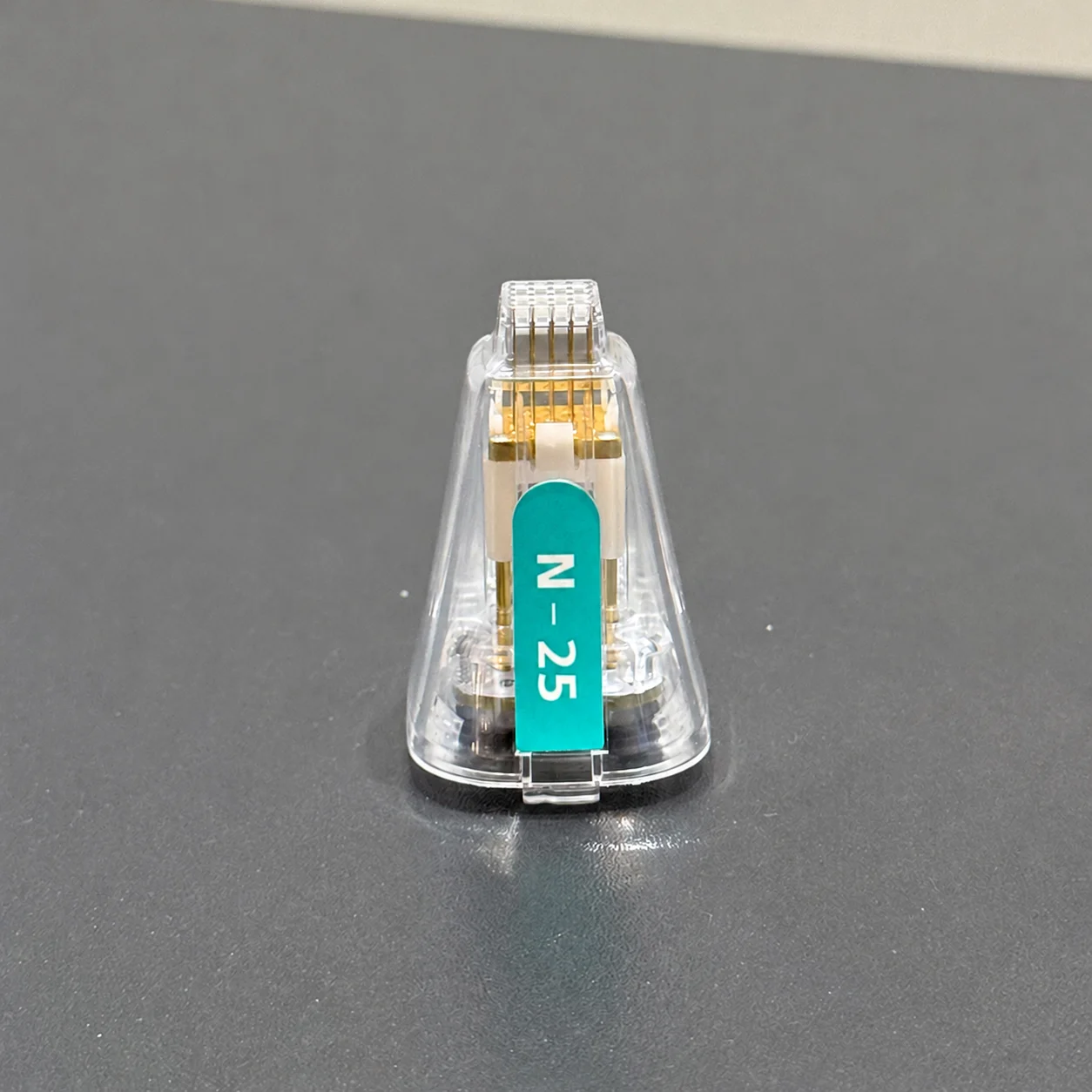
| N tip (pore tip) | Needles, not insulated | Along the whole needle, from just under the surface into the upper dermis | When the concern sits close to the surface |
| I tip | Needles insulated along the shaft | From the needle tip, deeper, passing the surface layers | When the concern sits deeper in specific areas |
| Pumping tip | Thicker needles | RF energy and an injected ingredient in the same pass | When an ingredient is delivered together with RF energy |
| Single-pin tip | One needle | One point at a time | When separate spots are treated one by one |
| Diamond, DDR, SFA tips | No needles | From the skin surface | As part of a combined plan |
How do Potenza tips differ from one another?
The N tip releases energy along the whole length of each needle, while the I tip has an insulated shaft and releases energy at the needle tip. That one design difference changes where the heat lands.
- N tip: energy spreads evenly from just under the surface into the upper dermis
- I tip: the coating keeps energy away from the surface layers, so it reaches deeper targets
- At the clinic: the N tip is chosen when the concern sits close to the surface
- At the clinic: the I tip is chosen when the concern sits deeper in specific areas
Because the two tips place heat at different depths, the choice between them follows where the concern sits in the skin.
The pumping tip delivers RF energy and an injected ingredient in the same pass, and the single-pin tip uses one needle to treat one point at a time.
- Pumping tip: its needles are thicker, so they can carry an ingredient into the skin while RF energy is released
- Which ingredient: decided as part of the treatment plan, after the skin is examined
- Single-pin tip: one needle, aimed at a single spot
- How it works on the skin: the single-pin tip moves from spot to spot, while the other needle tips cover an area
The single-pin tip is used when concerns are scattered across the face rather than spread evenly, because it treats each spot on its own.
How are the settings chosen once the tip is picked?
After the tip is chosen, the doctor sets the energy in manual mode and adjusts it for each area of the face. The tip is the first decision, and the settings are the second.
In manual mode, these are set one by one:
- RF frequency
- the time energy is delivered with each pulse
- the interval between pulses
- intensity
- needle depth
The forehead, cheeks, and jaw differ in skin thickness and oil levels, so the settings change from one area to the next. Higher energy is not automatically better. The aim is the level of stimulus the skin needs.
What happens at a Potenza session at 4ever the Cheongdam?
A Potenza session at 4ever the Cheongdam starts with an examination of the skin, and the tip and settings are decided from what that examination shows.
- Examination: the doctor looks at the concern, how deep it sits in the skin, and the area to be treated
- Tip: each tip is genuine and used for one session, and its package is opened in front of you
- Settings: adjusted area by area in manual mode
- After treatment: the clinic explains aftercare and follows up by message during recovery
- Language: consultations are available in English, Korean, and Chinese
If you are visiting from abroad, bring a list of the medications you take and any recent treatments to the same area.
What is Potenza approved for in Korea?
In Korea, Potenza is a medical device approved by the Ministry of Food and Drug Safety (MFDS). It is made by Jeisys Medical and classified as a general-purpose electrosurgical unit.
Two approvals are held under the Potenza name, and each states a different approved purpose. “Jeheo” (제허) means manufacturing approval.
- 제허 19-126 (POTENZA™): used to improve wrinkles, melasma, senile lentigines, telangiectasia, rosacea, acne, hyperhidrosis, and osmidrosis by coagulating tissue with radiofrequency current, and used to remove syringoma by incising tissue
- 제허 19-78 (POTENZA RF): an electrosurgical unit used to coagulate tissue with radiofrequency current
Telangiectasia means small visible blood vessels, osmidrosis means strong underarm odor, and syringoma means small, harmless skin bumps.
You can check these records yourself on the MFDS medical device portal. Type the approval number exactly as written, including the Korean characters. When you open a record, look for:
- the approval number and the company name
- the status, which shows whether the approval is still valid
- the approved purpose, which is the wording quoted above
What side effects should you know about?
Potenza can cause side effects, as other RF microneedling treatments can. Published studies of RF microneedling report temporary pain, redness, and swelling, as well as darkening of the skin after inflammation, called post-inflammatory hyperpigmentation (study). Small, temporary breakouts can also appear after treatment.
A systematic review of microneedling named these factors as raising the risk of side effects (review):
- active skin infection
- darker skin types
- metal allergies
Tell the clinic about any medication you take, any metal allergy, and any prior treatment in the same area. Whether this treatment suits you is a clinical judgment your doctor makes after examining you.
Frequently asked questions
Which Potenza tip will be used for my skin?
It depends on how deep the concern sits in the skin and on the area being treated. The tip is chosen after your skin is examined, and you can ask which tip is planned for each area and what it is meant to do.
Does the pumping tip inject something into the skin?
Yes. The pumping tip releases RF energy and delivers an ingredient in the same pass, through needles that are thicker than those of the other needle tips. Which ingredient is used is decided as part of the treatment plan.
Do all Potenza tips use needles?
No. The Diamond, DDR, and SFA tips have no needles and deliver RF energy from the skin surface. They can be combined with needle tips as part of a plan.
Can more than one tip be used in a treatment plan?
Yes. Tips can be combined, for example a needle tip with a non-invasive tip. The combination depends on your concerns and on the areas being treated.
Is a new tip used for every session?
Yes. At 4ever the Cheongdam, each tip is genuine and used for one session, and the package is opened in front of you.
When will I see a change after Potenza?
Not on the day of treatment. The skin’s response to the needles and heat develops gradually, so any change shows over several weeks.
This article is general information about a treatment offered at 4ever the Cheongdam. It is not medical advice and does not replace consultation with a doctor who has examined you. Product approvals, regulations, and clinic practices change; please confirm anything that affects a decision with the clinic directly.
4ever the Cheongdam
99-23 Cheongdam-dong, Gangnam-gu, Seoul, Korea
서울 강남구 청담동 99-23 (copy this line into Naver Map, Kakao Map, or show it to a taxi driver)
Tel. +82-2-518-7705

Potenza is one radiofrequency (RF) device that works with interchangeable tips, and the tip decides where and how the energy enters the skin. Needle tips differ in the number of needles, their thickness, and whether the needle shaft is insulated. One needle tip also injects an ingredient as it delivers energy, and a separate group of tips delivers RF from the skin surface without needles. The tip and its settings are chosen after the skin is examined.
How does Potenza deliver energy into the skin?
Potenza delivers RF energy through very fine needles that pass through the outer layer of the skin and release the energy at a set depth below it. That outer layer, the epidermis, is tougher than most people expect. Devices that send heat in from the surface have to push it through this barrier, and many of them use cooling to protect the surface while the heat travels deeper. Our article on how heat is controlled during RF treatments covers that approach.
Potenza takes a different route. The needles carry the energy past the barrier into the layer below, the dermis, which is a dense mesh of fibers. From the needle tip, the RF current finds its way through this mesh and branches out, much like lightning branches across the sky.
Here is what happens, in order:
Any change in the skin comes from the skin’s own response to this. It develops gradually over several weeks rather than on the day of treatment.
What kinds of tips does Potenza use?
Potenza tips fall into two groups: needle tips that enter the skin, and non-invasive tips that deliver RF from the surface. The device works a little like a screwdriver with changeable bits. The handle stays the same, and the bit decides what the tool does.
Needle tips differ in three ways:
The non-invasive tips used at the clinic include the Diamond, DDR, and SFA tips. They have no needles and deliver RF from the skin surface. Needle tips and non-invasive tips can be combined, so one device can follow many different plans.
These are the tips mainly used at 4ever the Cheongdam:
How do Potenza tips differ from one another?
The N tip releases energy along the whole length of each needle, while the I tip has an insulated shaft and releases energy at the needle tip. That one design difference changes where the heat lands.
Because the two tips place heat at different depths, the choice between them follows where the concern sits in the skin.
The pumping tip delivers RF energy and an injected ingredient in the same pass, and the single-pin tip uses one needle to treat one point at a time.
The single-pin tip is used when concerns are scattered across the face rather than spread evenly, because it treats each spot on its own.
How are the settings chosen once the tip is picked?
After the tip is chosen, the doctor sets the energy in manual mode and adjusts it for each area of the face. The tip is the first decision, and the settings are the second.
In manual mode, these are set one by one:
The forehead, cheeks, and jaw differ in skin thickness and oil levels, so the settings change from one area to the next. Higher energy is not automatically better. The aim is the level of stimulus the skin needs.
What happens at a Potenza session at 4ever the Cheongdam?
A Potenza session at 4ever the Cheongdam starts with an examination of the skin, and the tip and settings are decided from what that examination shows.
If you are visiting from abroad, bring a list of the medications you take and any recent treatments to the same area.
What is Potenza approved for in Korea?
In Korea, Potenza is a medical device approved by the Ministry of Food and Drug Safety (MFDS). It is made by Jeisys Medical and classified as a general-purpose electrosurgical unit.
Two approvals are held under the Potenza name, and each states a different approved purpose. “Jeheo” (제허) means manufacturing approval.
Telangiectasia means small visible blood vessels, osmidrosis means strong underarm odor, and syringoma means small, harmless skin bumps.
You can check these records yourself on the MFDS medical device portal. Type the approval number exactly as written, including the Korean characters. When you open a record, look for:
What side effects should you know about?
Potenza can cause side effects, as other RF microneedling treatments can. Published studies of RF microneedling report temporary pain, redness, and swelling, as well as darkening of the skin after inflammation, called post-inflammatory hyperpigmentation (study). Small, temporary breakouts can also appear after treatment.
A systematic review of microneedling named these factors as raising the risk of side effects (review):
Tell the clinic about any medication you take, any metal allergy, and any prior treatment in the same area. Whether this treatment suits you is a clinical judgment your doctor makes after examining you.
Frequently asked questions
Which Potenza tip will be used for my skin?
It depends on how deep the concern sits in the skin and on the area being treated. The tip is chosen after your skin is examined, and you can ask which tip is planned for each area and what it is meant to do.
Does the pumping tip inject something into the skin?
Yes. The pumping tip releases RF energy and delivers an ingredient in the same pass, through needles that are thicker than those of the other needle tips. Which ingredient is used is decided as part of the treatment plan.
Do all Potenza tips use needles?
No. The Diamond, DDR, and SFA tips have no needles and deliver RF energy from the skin surface. They can be combined with needle tips as part of a plan.
Can more than one tip be used in a treatment plan?
Yes. Tips can be combined, for example a needle tip with a non-invasive tip. The combination depends on your concerns and on the areas being treated.
Is a new tip used for every session?
Yes. At 4ever the Cheongdam, each tip is genuine and used for one session, and the package is opened in front of you.
When will I see a change after Potenza?
Not on the day of treatment. The skin’s response to the needles and heat develops gradually, so any change shows over several weeks.
This article is general information about a treatment offered at 4ever the Cheongdam. It is not medical advice and does not replace consultation with a doctor who has examined you. Product approvals, regulations, and clinic practices change; please confirm anything that affects a decision with the clinic directly.
4ever the Cheongdam
99-23 Cheongdam-dong, Gangnam-gu, Seoul, Korea
서울 강남구 청담동 99-23 (copy this line into Naver Map, Kakao Map, or show it to a taxi driver)
Tel. +82-2-518-7705