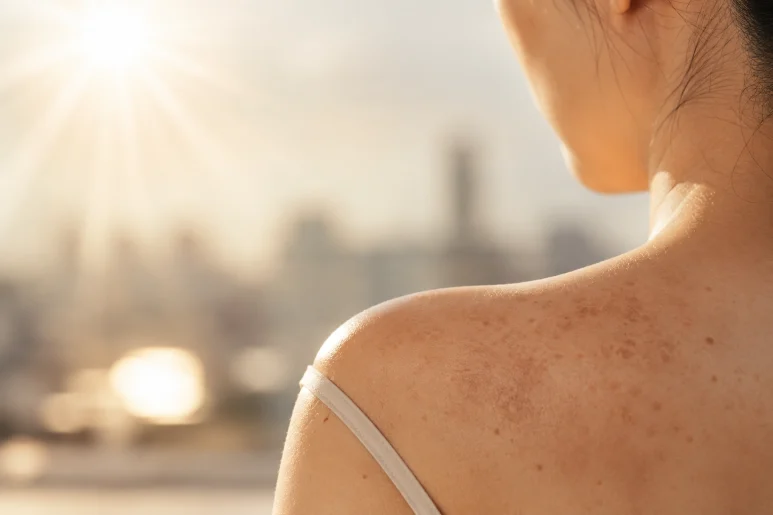
Summer is the season when pigmentation concerns escalate most visibly.
Existing melasma deepens, latent spots surface, and overall tone becomes uneven as UV exposure and heat repeatedly stimulate melanocyte activity.
At 4ever Cheongdam Clinic, Dr. Younghan Seo explains why pigmentation management requires more than surface treatment, and how the Helios IV laser addresses multiple pigment types and depths within a single protocol.
Key Takeaways
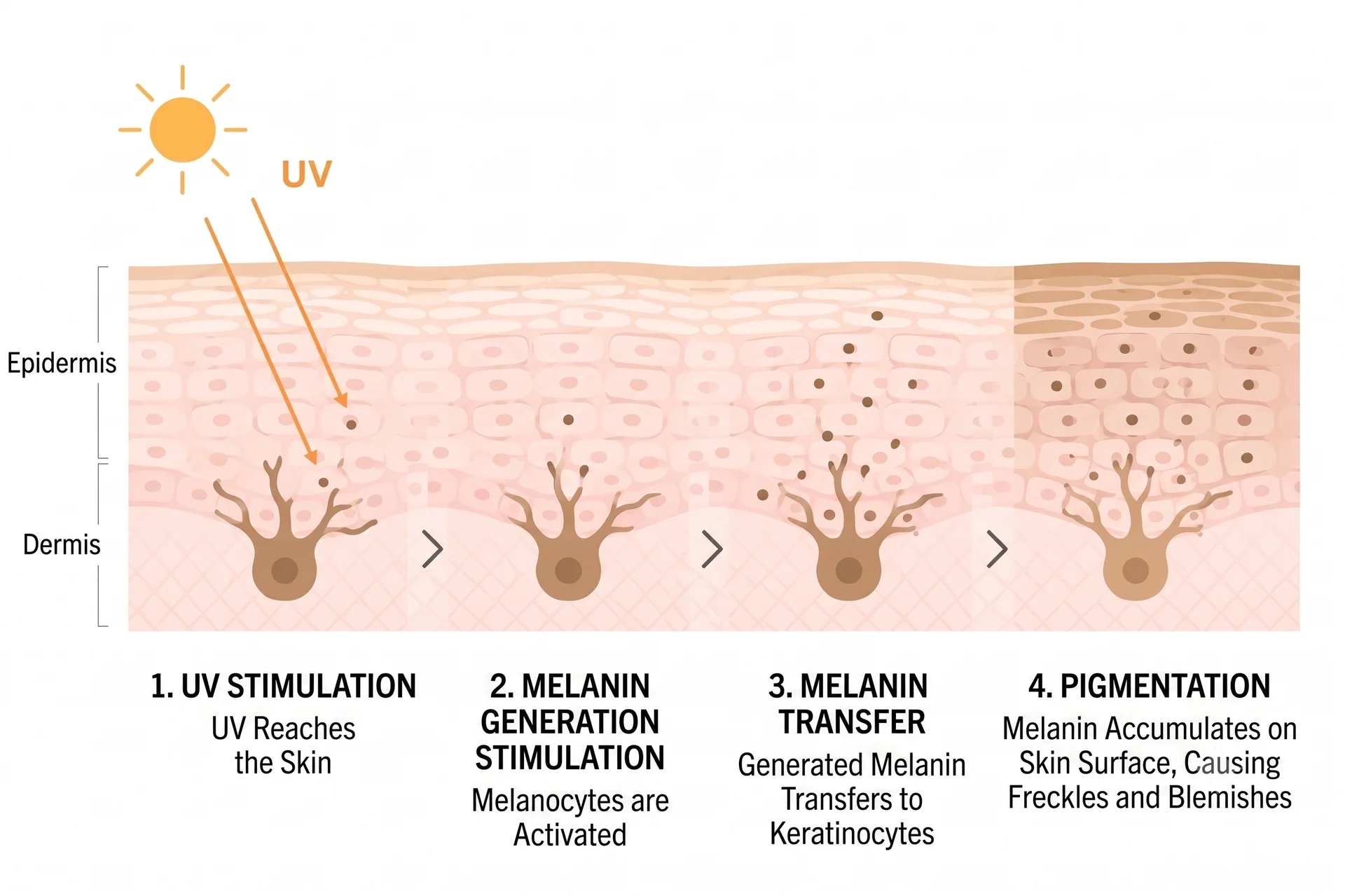
Melanin is a protective response to UV stimulation.
When that stimulation is repeated or intense, the response becomes excessive and produces the visible pigmentation seen as melasma, dark spots, and freckling.
East Asian skin has relatively higher melanocyte activity, making established pigmentation more persistent and recurrence more common after treatment.
Most laser pigmentation research has been conducted on Western skin types.
The 785nm wavelength available on Helios IV has shown particular promise in clinical research oriented toward East Asian pigmentation characteristics.
The DOE fractional mode on Helios IV adds a rejuvenation layer to the treatment, improving skin texture, tone evenness, and fine lines alongside pigmentation correction.
Sun protection and antioxidant support are the most important maintenance factors after treatment.
Without them, pigmentation recurrence is significantly more likely.
Why Summer Worsens Pigmentation
Melanin production is triggered by UV exposure as a protective mechanism.
Under normal conditions, this response is proportionate and temporary.
When UV stimulation is strong, prolonged, or repeated, melanocyte activity becomes dysregulated and produces visible pigmentation.
Summer compounds this through two simultaneous factors.
UVB stimulates melanin production directly at the surface.
Heat and infrared exposure add a separate stimulatory load on top of UV, pushing melanocyte activity higher than UV alone would produce.
For East Asian skin specifically, this matters more than it might for Western skin types.
Melanocyte activity is relatively higher in East Asian populations, which means the pigmentation response is stronger per unit of UV exposure and established pigmentation persists longer after the stimulus is removed.
Recurrence is also more common following treatment if the post-treatment environment is not carefully managed.
The clinical implication is that treatment planning for pigmentation in East Asian patients needs to account for pigment depth and recurrence risk, not only the visible presentation.
Why the 785nm Wavelength Matters
Laser pigmentation treatment operates on the principle of selective photothermolysis: a wavelength is selected that is preferentially absorbed by melanin, destroying the pigment while leaving surrounding tissue intact.
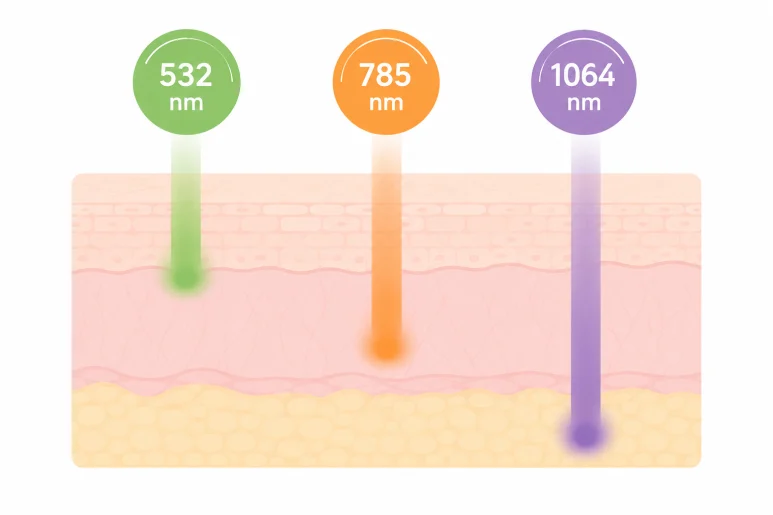
Different wavelengths penetrate to different tissue depths and interact differently with different melanin subtypes.
The established pigmentation laser wavelengths are 532nm, 755nm, and 1064nm, and the majority of the clinical research behind these was conducted in Western populations.
785nm is the wavelength that distinguishes Helios IV, and recent research has specifically examined its suitability for East Asian pigmentation characteristics.
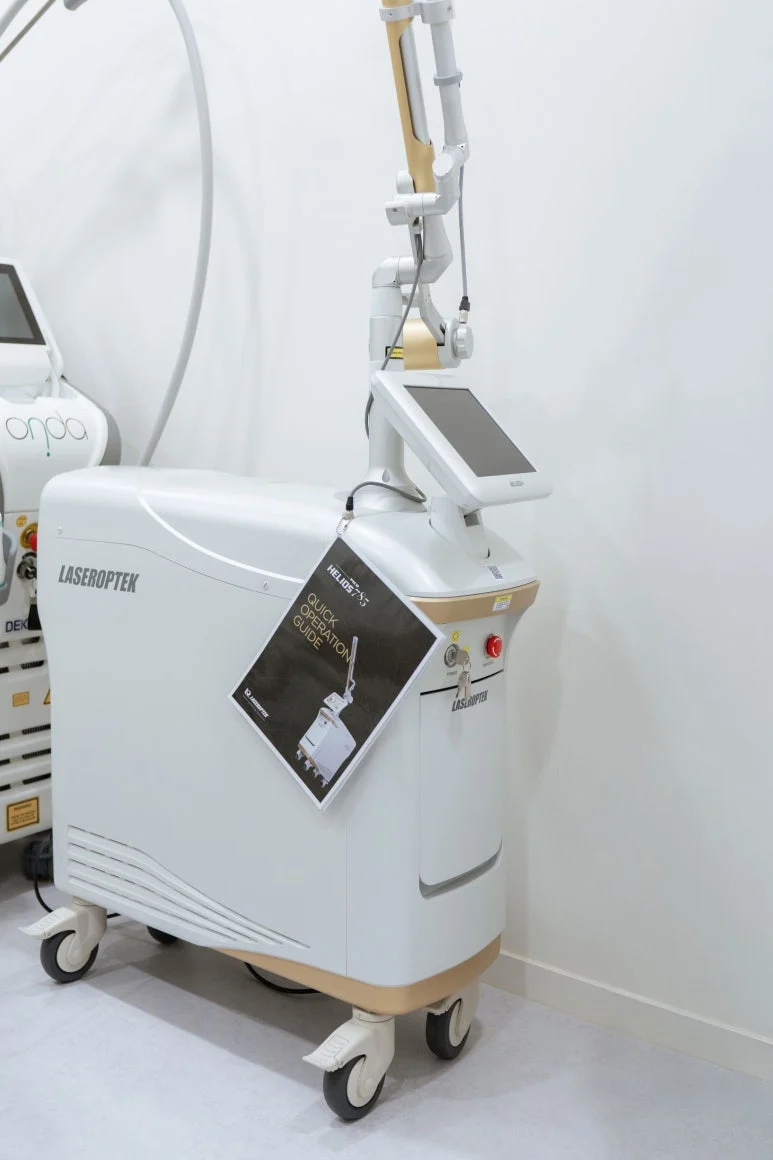
The practical advantage is that Helios IV can apply 532nm, 785nm, and 1064nm selectively within the same treatment session.
This allows the wavelength to be matched to the type and depth of pigmentation being addressed rather than applying a fixed wavelength to all presentations.
Dr. Seo presented clinical experience with the Helios 785 at the ASLS conference in the first half of 2026, as part of a broader research presentation covering the 785nm wavelength and rejuvenation protocol in East Asian patients.
Additional presentations were made at LaserOptek Symposium, KALDAT, and KOAT during the same period.
Why Regeneration Is Part of the Treatment
Pigmentation removal addresses the visible discoloration.
It does not automatically improve the skin environment that allowed the pigmentation to develop, and it does not address the texture and elasticity changes that often accompany chronic UV exposure.
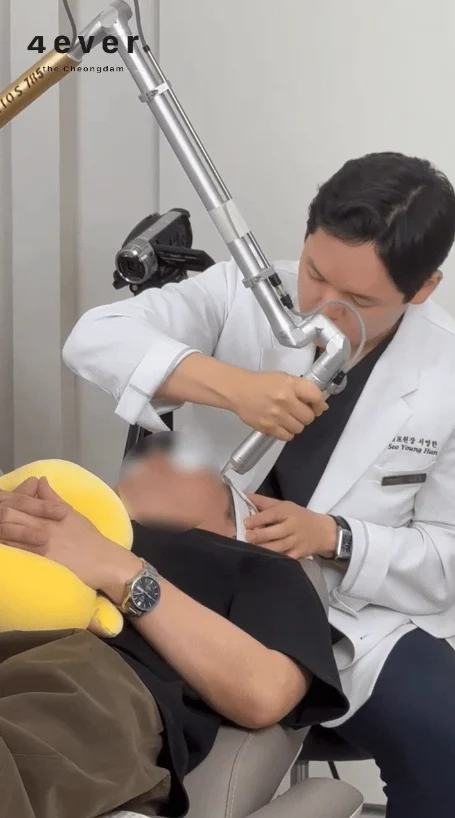
At 4ever Cheongdam Clinic, the DOE fractional mode of Helios IV is used alongside the pigmentation protocol to deliver a rejuvenation layer within the same session.
DOE fractional delivers microenergy uniformly across the treated area, stimulating a tissue regeneration response that improves skin texture, tone uniformity, and fine lines in addition to clearing pigmentation.
The clinical rationale is straightforward: a patient whose pigmentation clears but whose skin texture remains rough and whose elasticity remains low is likely to find the overall result less satisfying than the pigmentation improvement alone would suggest.
Addressing both simultaneously produces a more complete and visually coherent outcome.
Maintenance After Treatment
Pigmentation recurrence is the most common source of dissatisfaction after laser treatment, and it is almost always attributable to insufficient sun protection in the weeks and months following the session.
After laser treatment, the skin is more photosensitive than baseline.
Melanocytes that have been disrupted remain in a reactive state, and UV exposure during this window can trigger pigmentation that is worse than what was present before treatment.
Consistent, correctly applied SPF is not optional during this period.
Antioxidant support addresses the oxidative stress pathway that contributes to melanin overproduction independently of UV.
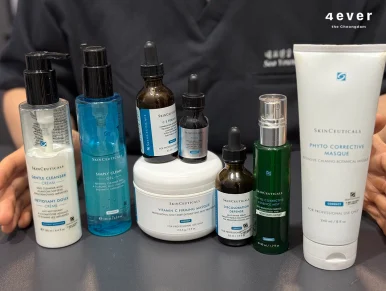
Dr. Seo recommends formulations containing vitamin C, vitamin E, and ferulic acid for patients managing ongoing pigmentation.
SkinCeuticals CE Ferulic is the specific product referenced in clinical consultations for patients seeking antioxidant maintenance.
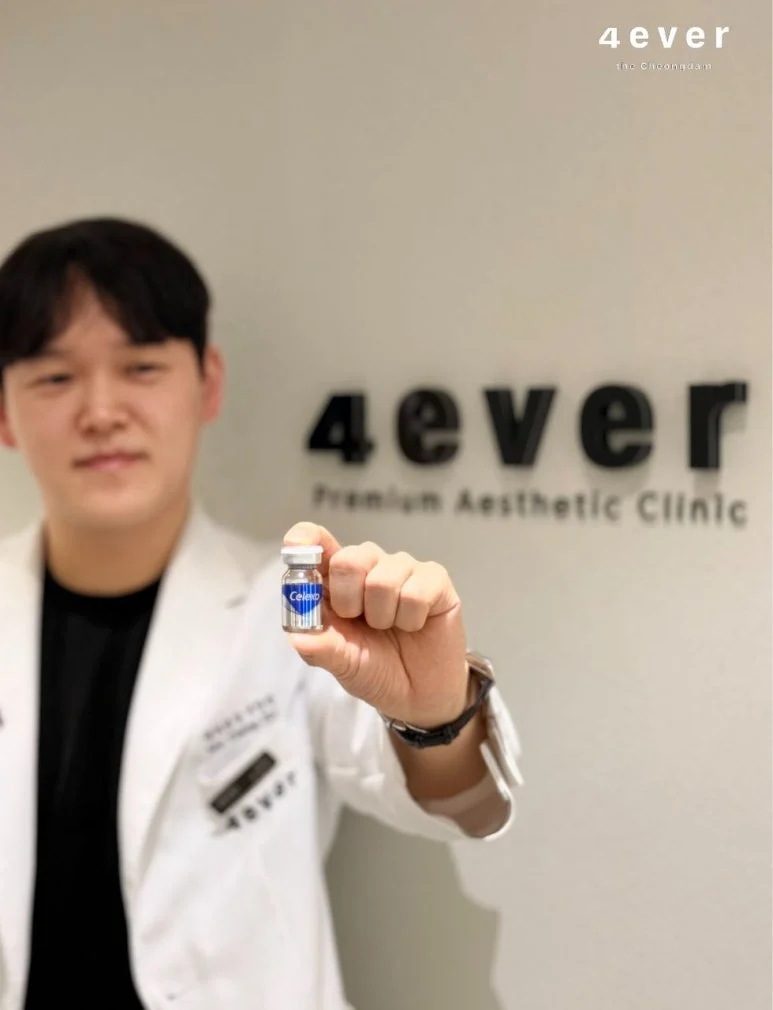
For patients who want a more comprehensive regeneration environment alongside pigmentation management, Celexo Double Boost is a supplementary option that addresses the inflammatory signaling underlying chronic skin reactivity.
Frequently Asked Questions
Q. Why does my melasma keep coming back after treatment?
A. Melasma recurrence is driven primarily by ongoing UV exposure and hormonal factors that keep melanocyte activity elevated. Laser treatment clears existing pigmentation but does not alter the underlying tendency to produce it. Without rigorous sun protection and, where relevant, hormonal management, recurrence is the expected outcome regardless of how effective the initial treatment was.
Q. How many sessions will I need?
A. This depends on pigmentation depth, severity, and skin type. Superficial spots often respond within two to three sessions. Melasma, which involves deeper and more diffuse pigmentation with a higher recurrence tendency, typically requires a longer course with maintenance intervals. An assessment of pigment depth and distribution at the first consultation gives a more specific projection.
Q. Is the treatment painful?
A. Helios IV treatment produces a sensation of warmth and brief stinging with each pulse. Most patients find it tolerable. Topical anesthesia is applied before the session to reduce discomfort. The DOE fractional component produces mild redness and sensitivity that typically resolves within one to two days.
Q. Can I have this treatment in summer, or should I wait?
A. Summer treatment is possible with rigorous sun avoidance before and after each session. Because UV exposure is higher in summer, the risk of recurrence and post-treatment hyperpigmentation is also higher. Many patients choose to begin a course in late summer or autumn when UV intensity decreases, but those who proceed in summer can still achieve good results with careful sun protection management.
Q. How is Helios IV different from older pigmentation lasers?
A. The primary distinction is the 785nm wavelength and its application to East Asian pigmentation, combined with the DOE fractional rejuvenation mode. Older systems using only 532nm or 1064nm address fewer pigmentation types and depths in a single session, and were validated primarily in Western skin types.
Ready to discuss a treatment plan tailored to your skin?
4ever Cheongdam Clinic offers one-to-one consultations with Dr. Younghan Seo.
Book Your Consultation

Summer is the season when pigmentation concerns escalate most visibly.
Existing melasma deepens, latent spots surface, and overall tone becomes uneven as UV exposure and heat repeatedly stimulate melanocyte activity.
At 4ever Cheongdam Clinic, Dr. Younghan Seo explains why pigmentation management requires more than surface treatment, and how the Helios IV laser addresses multiple pigment types and depths within a single protocol.
Key Takeaways
Melanin is a protective response to UV stimulation.
When that stimulation is repeated or intense, the response becomes excessive and produces the visible pigmentation seen as melasma, dark spots, and freckling.
East Asian skin has relatively higher melanocyte activity, making established pigmentation more persistent and recurrence more common after treatment.
Most laser pigmentation research has been conducted on Western skin types.
The 785nm wavelength available on Helios IV has shown particular promise in clinical research oriented toward East Asian pigmentation characteristics.
The DOE fractional mode on Helios IV adds a rejuvenation layer to the treatment, improving skin texture, tone evenness, and fine lines alongside pigmentation correction.
Sun protection and antioxidant support are the most important maintenance factors after treatment.
Without them, pigmentation recurrence is significantly more likely.
Why Summer Worsens Pigmentation
Melanin production is triggered by UV exposure as a protective mechanism.
Under normal conditions, this response is proportionate and temporary.
When UV stimulation is strong, prolonged, or repeated, melanocyte activity becomes dysregulated and produces visible pigmentation.
Summer compounds this through two simultaneous factors.
UVB stimulates melanin production directly at the surface.
Heat and infrared exposure add a separate stimulatory load on top of UV, pushing melanocyte activity higher than UV alone would produce.
For East Asian skin specifically, this matters more than it might for Western skin types.
Melanocyte activity is relatively higher in East Asian populations, which means the pigmentation response is stronger per unit of UV exposure and established pigmentation persists longer after the stimulus is removed.
Recurrence is also more common following treatment if the post-treatment environment is not carefully managed.
The clinical implication is that treatment planning for pigmentation in East Asian patients needs to account for pigment depth and recurrence risk, not only the visible presentation.
Why the 785nm Wavelength Matters
Laser pigmentation treatment operates on the principle of selective photothermolysis: a wavelength is selected that is preferentially absorbed by melanin, destroying the pigment while leaving surrounding tissue intact.
Different wavelengths penetrate to different tissue depths and interact differently with different melanin subtypes.
The established pigmentation laser wavelengths are 532nm, 755nm, and 1064nm, and the majority of the clinical research behind these was conducted in Western populations.
785nm is the wavelength that distinguishes Helios IV, and recent research has specifically examined its suitability for East Asian pigmentation characteristics.
The practical advantage is that Helios IV can apply 532nm, 785nm, and 1064nm selectively within the same treatment session.
This allows the wavelength to be matched to the type and depth of pigmentation being addressed rather than applying a fixed wavelength to all presentations.
Dr. Seo presented clinical experience with the Helios 785 at the ASLS conference in the first half of 2026, as part of a broader research presentation covering the 785nm wavelength and rejuvenation protocol in East Asian patients.
Additional presentations were made at LaserOptek Symposium, KALDAT, and KOAT during the same period.
Why Regeneration Is Part of the Treatment
Pigmentation removal addresses the visible discoloration.
It does not automatically improve the skin environment that allowed the pigmentation to develop, and it does not address the texture and elasticity changes that often accompany chronic UV exposure.
At 4ever Cheongdam Clinic, the DOE fractional mode of Helios IV is used alongside the pigmentation protocol to deliver a rejuvenation layer within the same session.
DOE fractional delivers microenergy uniformly across the treated area, stimulating a tissue regeneration response that improves skin texture, tone uniformity, and fine lines in addition to clearing pigmentation.
The clinical rationale is straightforward: a patient whose pigmentation clears but whose skin texture remains rough and whose elasticity remains low is likely to find the overall result less satisfying than the pigmentation improvement alone would suggest.
Addressing both simultaneously produces a more complete and visually coherent outcome.
Maintenance After Treatment
Pigmentation recurrence is the most common source of dissatisfaction after laser treatment, and it is almost always attributable to insufficient sun protection in the weeks and months following the session.
After laser treatment, the skin is more photosensitive than baseline.
Melanocytes that have been disrupted remain in a reactive state, and UV exposure during this window can trigger pigmentation that is worse than what was present before treatment.
Consistent, correctly applied SPF is not optional during this period.
Antioxidant support addresses the oxidative stress pathway that contributes to melanin overproduction independently of UV.
Dr. Seo recommends formulations containing vitamin C, vitamin E, and ferulic acid for patients managing ongoing pigmentation.
SkinCeuticals CE Ferulic is the specific product referenced in clinical consultations for patients seeking antioxidant maintenance.
For patients who want a more comprehensive regeneration environment alongside pigmentation management, Celexo Double Boost is a supplementary option that addresses the inflammatory signaling underlying chronic skin reactivity.
Frequently Asked Questions
Q. Why does my melasma keep coming back after treatment?
A. Melasma recurrence is driven primarily by ongoing UV exposure and hormonal factors that keep melanocyte activity elevated. Laser treatment clears existing pigmentation but does not alter the underlying tendency to produce it. Without rigorous sun protection and, where relevant, hormonal management, recurrence is the expected outcome regardless of how effective the initial treatment was.
Q. How many sessions will I need?
A. This depends on pigmentation depth, severity, and skin type. Superficial spots often respond within two to three sessions. Melasma, which involves deeper and more diffuse pigmentation with a higher recurrence tendency, typically requires a longer course with maintenance intervals. An assessment of pigment depth and distribution at the first consultation gives a more specific projection.
Q. Is the treatment painful?
A. Helios IV treatment produces a sensation of warmth and brief stinging with each pulse. Most patients find it tolerable. Topical anesthesia is applied before the session to reduce discomfort. The DOE fractional component produces mild redness and sensitivity that typically resolves within one to two days.
Q. Can I have this treatment in summer, or should I wait?
A. Summer treatment is possible with rigorous sun avoidance before and after each session. Because UV exposure is higher in summer, the risk of recurrence and post-treatment hyperpigmentation is also higher. Many patients choose to begin a course in late summer or autumn when UV intensity decreases, but those who proceed in summer can still achieve good results with careful sun protection management.
Q. How is Helios IV different from older pigmentation lasers?
A. The primary distinction is the 785nm wavelength and its application to East Asian pigmentation, combined with the DOE fractional rejuvenation mode. Older systems using only 532nm or 1064nm address fewer pigmentation types and depths in a single session, and were validated primarily in Western skin types.
Ready to discuss a treatment plan tailored to your skin?
4ever Cheongdam Clinic offers one-to-one consultations with Dr. Younghan Seo.
Book Your Consultation