
Patients at 4ever Cheongdam Clinic often ask Dr. Younghan Seo the same question between appointments: what do you actually put on your face?
The answer tends to surprise them.
Most of it comes from a drugstore.
This post covers Dr. Seo’s personal three-step routine, the products behind it, and the skincare principles that matter most in summer.
Key Takeaways
A three-step routine of cleanser, serum, and moisturizer is sufficient for most people when the right products are chosen for each step.
In summer, the three priorities shift to calming, hydration, and sun protection rather than adding more products.
Sunscreen must be reapplied every two to three hours to remain effective — a single morning application does not hold through the day.
Summer clinic treatments are best oriented toward barrier strengthening and gentle resurfacing rather than aggressive stimulation.
Consistency with a simple routine consistently outperforms a complex one that gets abandoned.
The Routine: Three Steps, No More
Dr. Seo’s daily skincare routine has remained the same for years: cleanse, apply serum, and finish with a moisturizer.
It took time to find the right products for each step, but once established, the routine has stayed in place because it works and because it’s sustainable.
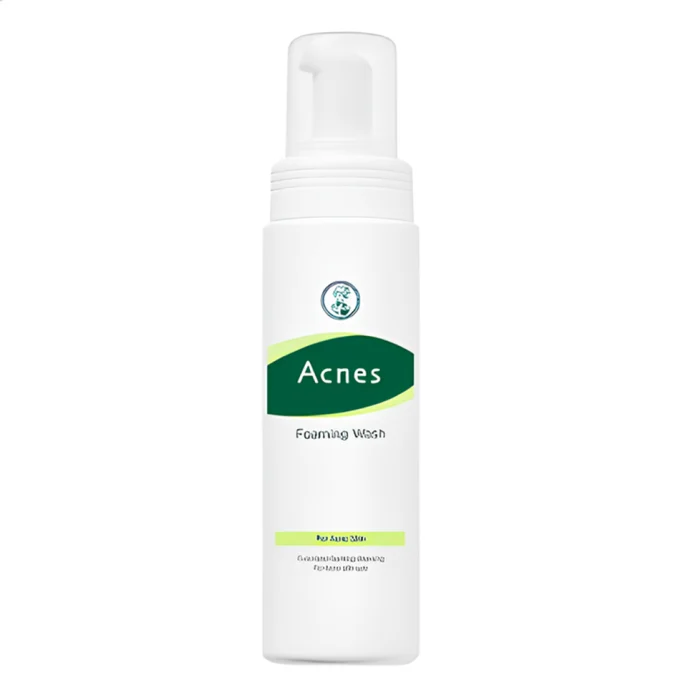
Step 1: Cleansing — Acnes Foam Cleanser
Cleansing is the foundation of any skincare routine.
Active ingredients in serums and moisturizers cannot penetrate effectively through a layer of sebum and surface buildup, which means everything applied afterward is only as effective as the cleanse that preceded it.
The Acnes Foam Cleanser removes sebum thoroughly without leaving the skin feeling tight afterward.
For skin that is prone to congestion or breakouts, it provides effective cleansing without the post-wash dryness that can trigger compensatory oil production.
This is a common seasonal mistake: reaching for a more aggressive cleanser in summer because the face feels oilier.
When the skin barrier is stripped too aggressively, the skin responds by producing more sebum, not less.
Clean but not dry is the target, regardless of season.
Dr. Seo has used this product for ten years.
The honest review is that no reason to switch has presented itself.
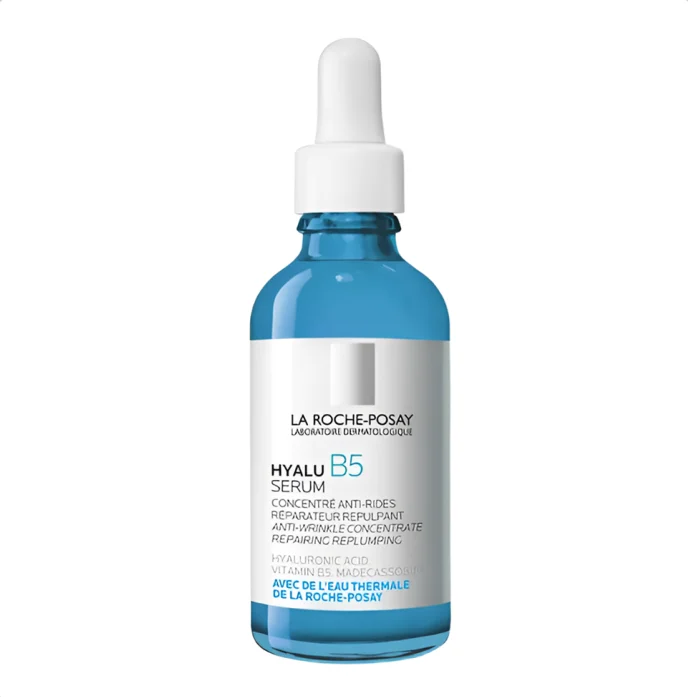
Step 2: Serum — La Roche-Posay Hyalu B5
Serum choice varies with the season and skin condition.
In summer, Dr. Seo consistently reaches for Hyalu B5 for one straightforward reason: it is lightweight.
It delivers meaningful hydration without the texture or residue that heavier serums leave in warm weather.
For a season defined by heat and humidity, that combination is difficult to improve on.
A common assumption is that oily or shiny skin doesn’t need a hydrating serum.
The logic doesn’t hold in practice.
Skin that appears oily on the surface can still be significantly dehydrated underneath, particularly after prolonged air conditioning exposure throughout the day.
Surface shine is not a reliable indicator of internal hydration.
A lightweight hydrating serum addresses the layer that topical observation misses.
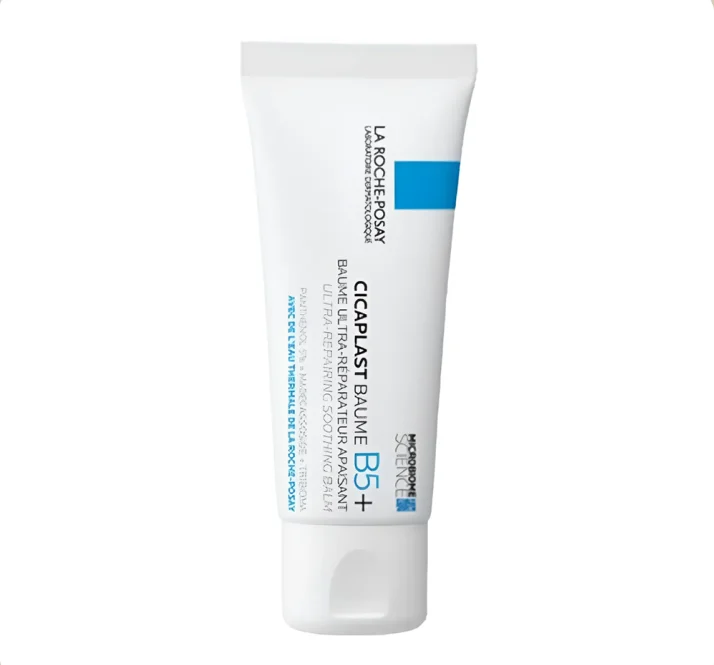
Step 3: Moisturizer — La Roche-Posay Cicaplast Baume
The role of a moisturizer is to seal in the hydration the serum delivers rather than add more.
Without an occlusive step, water-based ingredients applied to the skin evaporate before they have a chance to be absorbed into the deeper layers.
Cicaplast Baume supports both skin calming and barrier repair, making it suitable on sensitive days as well as routine ones.
It has been part of Dr. Seo’s routine for the same ten years as the cleanser, for the same reason: it reliably does what it’s supposed to.
Three Summer Skincare Principles
Beyond the products, summer skincare is shaped by three principles that apply regardless of skin type.
Calming
Heat and UV exposure accumulate as low-grade stress on the skin throughout the day.
After outdoor exposure, rinsing with lukewarm water and applying a calming sheet mask helps reduce residual heat and inflammation before it compounds.
Cooling and calming after sun exposure is as important as the sun protection itself.
Hydration
Air conditioning dehydrates skin steadily throughout the day in ways that aren’t visible until the barrier begins to compromise.
A lightweight hydrating serum used morning and evening maintains the moisture balance that environmental exposure disrupts.
Sun Protection
Sunscreen is the single most evidence-supported skincare intervention available, and it is also the one most commonly applied incorrectly.
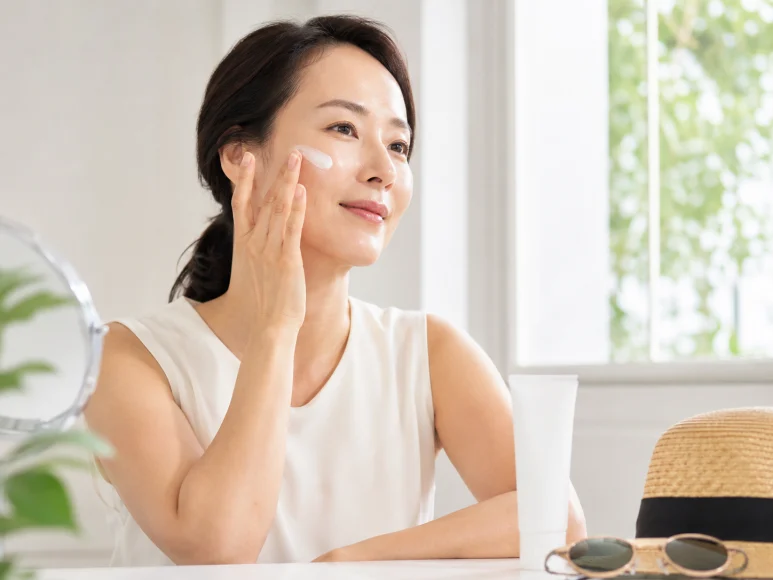
Four points matter for effective protection: apply a generous amount (a 500-won coin sized quantity or more for the face); apply it before makeup as part of the base routine; apply it 15 to 20 minutes before sun exposure to allow it to form a coherent film; and reapply every two to three hours throughout the day.
A single morning application does not maintain protection through a full day of outdoor or mixed indoor-outdoor activity.
On high-perspiration days, powder or mist-format sunscreens make reapplication over makeup more practical.
Summer Clinic Treatments Worth Considering
The same calming-first principle that applies to home skincare also guides treatment selection in summer.
Aggressive stimulation during a season when the skin is already under environmental stress tends to produce more irritation than benefit.
Treatments oriented toward gentle resurfacing and barrier strengthening are better suited to the season.
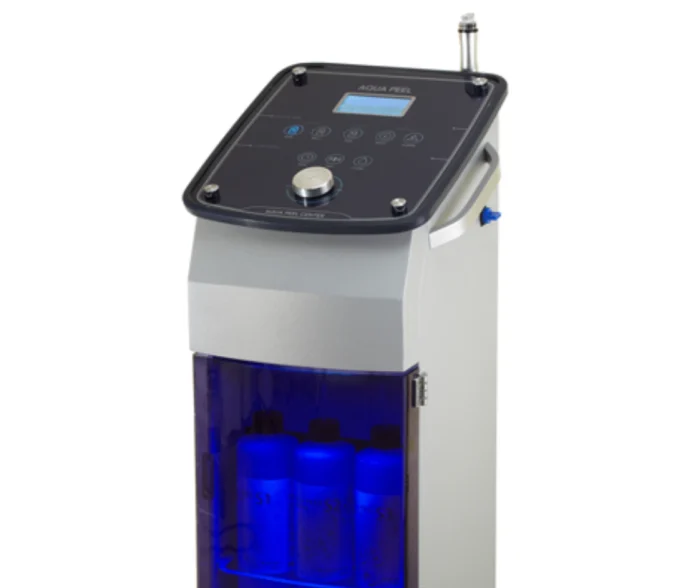
Aquapeel with Calming Care
Removes sebum and surface congestion without the inflammation that more aggressive exfoliation can cause.
Useful for skin that has become congested through summer heat and humidity without adding thermal or mechanical stress.
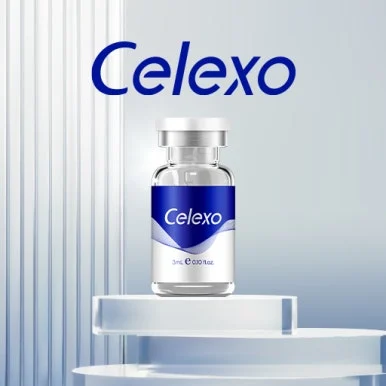
Skin Boosters: Rejuran, Celexo
Both support barrier function and reduce sensitivity at the cellular level.
For skin that has become reactive through UV accumulation or repeated heat exposure, these treatments address the underlying condition rather than masking the symptoms.

Helios IV 785 Laser
UV exposure leaves pigmentation and uneven tone as its most visible long-term effects.
The Helios IV 785 addresses existing pigmentation and tone irregularity without the recovery period associated with more aggressive laser treatments, making it appropriate for use during an active summer season.
Frequently Asked Questions
Q. Do I really need all three steps, or can I skip one?
A. The three steps serve different functions. Cleansing removes what shouldn’t be there; serum delivers active hydration; moisturizer seals it in. Skipping the serum means the moisturizer has less to work with. Skipping the moisturizer means hydration evaporates before it can be retained. The routine is short enough that all three steps together take under two minutes. The case for shortening it further is weak.
Q. My skin gets very oily in summer. Should I skip moisturizer?
A. No. Oily skin is not the same as well-hydrated skin. Skipping moisturizer when the skin is already producing excess sebum can push the skin further out of balance. A lightweight, non-comedogenic option like Cicaplast Baume provides barrier support without adding to congestion.
Q. How much sunscreen is actually enough?
A. Most people apply significantly less than what clinical studies use to establish SPF ratings. A generous application to the full face means more than a light pass. If the amount feels excessive at first, it is probably closer to the correct amount. The habit of applying a thin layer and assuming full protection is one of the most common sunscreen mistakes.
Q. Are there skincare ingredients I should avoid in summer?
A. Retinoids and strong exfoliating acids increase photosensitivity and are best used at night and with careful sun protection during summer months. Highly occlusive or oil-heavy products can contribute to congestion in hot, humid conditions. The general direction in summer is toward lighter textures and fewer active ingredients rather than more.
Q. When is the best time to start thinking about pigmentation from sun damage?
A. As soon as it appears, and ideally before it deepens. Pigmentation is easier to address when it is recent and superficial. UV-induced pigmentation accumulates over a season and becomes harder to treat as it settles into the deeper epidermal layers. Consistent sun protection slows accumulation; treatments like the Helios IV 785 address what has already formed.
Ready to discuss a treatment plan tailored to your skin?
4ever Cheongdam Clinic offers one-to-one consultations with Dr. Younghan Seo.
Book Your Consultation

Patients at 4ever Cheongdam Clinic often ask Dr. Younghan Seo the same question between appointments: what do you actually put on your face?
The answer tends to surprise them.
Most of it comes from a drugstore.
This post covers Dr. Seo’s personal three-step routine, the products behind it, and the skincare principles that matter most in summer.
Key Takeaways
A three-step routine of cleanser, serum, and moisturizer is sufficient for most people when the right products are chosen for each step.
In summer, the three priorities shift to calming, hydration, and sun protection rather than adding more products.
Sunscreen must be reapplied every two to three hours to remain effective — a single morning application does not hold through the day.
Summer clinic treatments are best oriented toward barrier strengthening and gentle resurfacing rather than aggressive stimulation.
Consistency with a simple routine consistently outperforms a complex one that gets abandoned.
The Routine: Three Steps, No More
Dr. Seo’s daily skincare routine has remained the same for years: cleanse, apply serum, and finish with a moisturizer.
It took time to find the right products for each step, but once established, the routine has stayed in place because it works and because it’s sustainable.
Step 1: Cleansing — Acnes Foam Cleanser
Cleansing is the foundation of any skincare routine.
Active ingredients in serums and moisturizers cannot penetrate effectively through a layer of sebum and surface buildup, which means everything applied afterward is only as effective as the cleanse that preceded it.
The Acnes Foam Cleanser removes sebum thoroughly without leaving the skin feeling tight afterward.
For skin that is prone to congestion or breakouts, it provides effective cleansing without the post-wash dryness that can trigger compensatory oil production.
This is a common seasonal mistake: reaching for a more aggressive cleanser in summer because the face feels oilier.
When the skin barrier is stripped too aggressively, the skin responds by producing more sebum, not less.
Clean but not dry is the target, regardless of season.
Dr. Seo has used this product for ten years.
The honest review is that no reason to switch has presented itself.
Step 2: Serum — La Roche-Posay Hyalu B5
Serum choice varies with the season and skin condition.
In summer, Dr. Seo consistently reaches for Hyalu B5 for one straightforward reason: it is lightweight.
It delivers meaningful hydration without the texture or residue that heavier serums leave in warm weather.
For a season defined by heat and humidity, that combination is difficult to improve on.
A common assumption is that oily or shiny skin doesn’t need a hydrating serum.
The logic doesn’t hold in practice.
Skin that appears oily on the surface can still be significantly dehydrated underneath, particularly after prolonged air conditioning exposure throughout the day.
Surface shine is not a reliable indicator of internal hydration.
A lightweight hydrating serum addresses the layer that topical observation misses.
Step 3: Moisturizer — La Roche-Posay Cicaplast Baume
The role of a moisturizer is to seal in the hydration the serum delivers rather than add more.
Without an occlusive step, water-based ingredients applied to the skin evaporate before they have a chance to be absorbed into the deeper layers.
Cicaplast Baume supports both skin calming and barrier repair, making it suitable on sensitive days as well as routine ones.
It has been part of Dr. Seo’s routine for the same ten years as the cleanser, for the same reason: it reliably does what it’s supposed to.
Three Summer Skincare Principles
Beyond the products, summer skincare is shaped by three principles that apply regardless of skin type.
Calming
Heat and UV exposure accumulate as low-grade stress on the skin throughout the day.
After outdoor exposure, rinsing with lukewarm water and applying a calming sheet mask helps reduce residual heat and inflammation before it compounds.
Cooling and calming after sun exposure is as important as the sun protection itself.
Hydration
Air conditioning dehydrates skin steadily throughout the day in ways that aren’t visible until the barrier begins to compromise.
A lightweight hydrating serum used morning and evening maintains the moisture balance that environmental exposure disrupts.
Sun Protection
Sunscreen is the single most evidence-supported skincare intervention available, and it is also the one most commonly applied incorrectly.
Four points matter for effective protection: apply a generous amount (a 500-won coin sized quantity or more for the face); apply it before makeup as part of the base routine; apply it 15 to 20 minutes before sun exposure to allow it to form a coherent film; and reapply every two to three hours throughout the day.
A single morning application does not maintain protection through a full day of outdoor or mixed indoor-outdoor activity.
On high-perspiration days, powder or mist-format sunscreens make reapplication over makeup more practical.
Summer Clinic Treatments Worth Considering
The same calming-first principle that applies to home skincare also guides treatment selection in summer.
Aggressive stimulation during a season when the skin is already under environmental stress tends to produce more irritation than benefit.
Treatments oriented toward gentle resurfacing and barrier strengthening are better suited to the season.
Aquapeel with Calming Care
Removes sebum and surface congestion without the inflammation that more aggressive exfoliation can cause.
Useful for skin that has become congested through summer heat and humidity without adding thermal or mechanical stress.
Skin Boosters: Rejuran, Celexo
Both support barrier function and reduce sensitivity at the cellular level.
For skin that has become reactive through UV accumulation or repeated heat exposure, these treatments address the underlying condition rather than masking the symptoms.
Helios IV 785 Laser
UV exposure leaves pigmentation and uneven tone as its most visible long-term effects.
The Helios IV 785 addresses existing pigmentation and tone irregularity without the recovery period associated with more aggressive laser treatments, making it appropriate for use during an active summer season.
Frequently Asked Questions
Q. Do I really need all three steps, or can I skip one?
A. The three steps serve different functions. Cleansing removes what shouldn’t be there; serum delivers active hydration; moisturizer seals it in. Skipping the serum means the moisturizer has less to work with. Skipping the moisturizer means hydration evaporates before it can be retained. The routine is short enough that all three steps together take under two minutes. The case for shortening it further is weak.
Q. My skin gets very oily in summer. Should I skip moisturizer?
A. No. Oily skin is not the same as well-hydrated skin. Skipping moisturizer when the skin is already producing excess sebum can push the skin further out of balance. A lightweight, non-comedogenic option like Cicaplast Baume provides barrier support without adding to congestion.
Q. How much sunscreen is actually enough?
A. Most people apply significantly less than what clinical studies use to establish SPF ratings. A generous application to the full face means more than a light pass. If the amount feels excessive at first, it is probably closer to the correct amount. The habit of applying a thin layer and assuming full protection is one of the most common sunscreen mistakes.
Q. Are there skincare ingredients I should avoid in summer?
A. Retinoids and strong exfoliating acids increase photosensitivity and are best used at night and with careful sun protection during summer months. Highly occlusive or oil-heavy products can contribute to congestion in hot, humid conditions. The general direction in summer is toward lighter textures and fewer active ingredients rather than more.
Q. When is the best time to start thinking about pigmentation from sun damage?
A. As soon as it appears, and ideally before it deepens. Pigmentation is easier to address when it is recent and superficial. UV-induced pigmentation accumulates over a season and becomes harder to treat as it settles into the deeper epidermal layers. Consistent sun protection slows accumulation; treatments like the Helios IV 785 address what has already formed.
Ready to discuss a treatment plan tailored to your skin?
4ever Cheongdam Clinic offers one-to-one consultations with Dr. Younghan Seo.
Book Your Consultation